
How to Start Wearing Color After 50 (When Your Closet is All Black and Navy)

We’ve all relied on dark colors for way too long. When you spend decades grabbing black and navy pieces because they look neat, thin you out, and take zero effort to match, throwing on a bright jacket or a vivid sweater can suddenly feel incredibly loud.
But looking modern over 50 absolutely doesn’t require packing your closet full of loud, blinding pieces. Adding color looks much better when you link it directly to the exact clothes you already rely on, rather than trying to invent a whole new persona.
Gaining style confidence over 50 really just starts with a single muted tone, one great accessory, or an extra layer thrown over those dark basics you wear every single day.
We aren’t trying to throw out your favorite navy and black items. The true goal is letting those trusty dark pieces act as a sturdy base for something a little more fun.
Why We Stick to Dark Basics Like Navy and Black
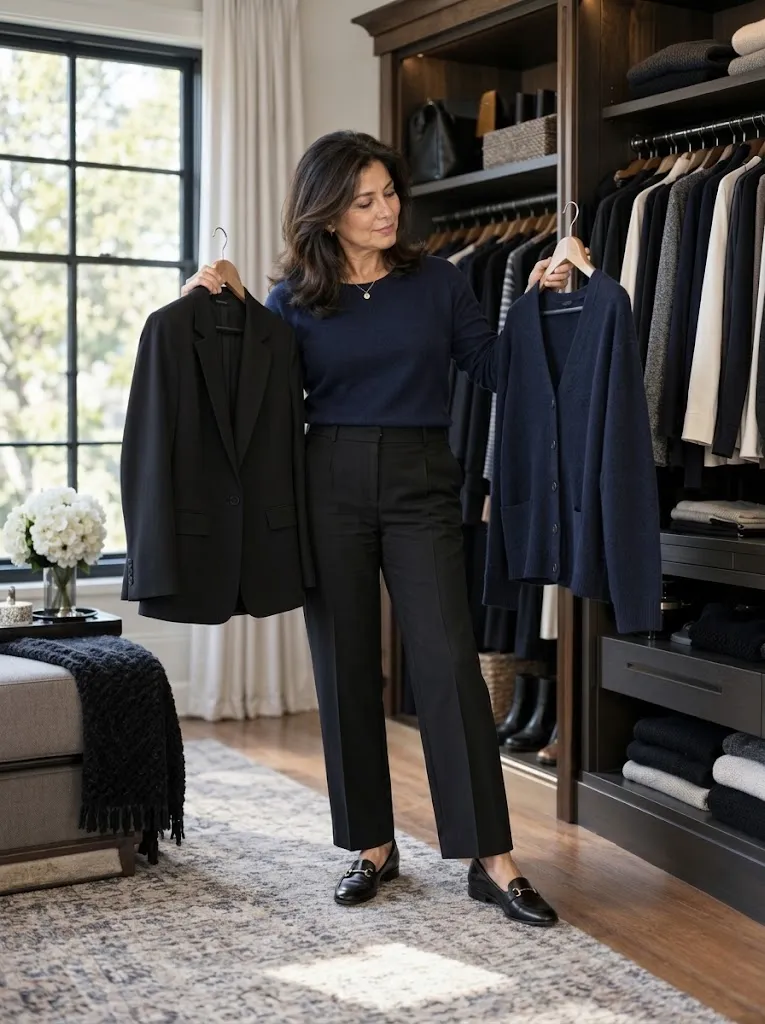
A closet full of dark clothes simply makes getting dressed in the morning entirely stress-free. Black pants look great with a black sweater, navy jeans pair with just about any plain shirt, and you never have to worry if something looks completely wrong.
Adding a bright shade brings up a whole new set of worries: Does this actually look good on me? Is it too flashy? How do I style it? Will I feel like I’m wearing a costume?
The best trick is to stop viewing color as the enemy of your favorite neutral basics. Simply treat that pop of color as just one more puzzle piece.
You get to keep the straight black pants, the sharp navy blazer, the dark jeans, the comfy loafers, and the basic tops you wear weekly. A fresh shade simply updates a single part of that daily outfit formula.
A few tired fashion rules also make adding bright pieces feel way more difficult than it actually needs to be.
| Outdated Fashion Rule | What Works Much Better Today |
|---|---|
| Save bright pieces strictly for fancy events | A colorful top or soft knit feels totally appropriate on a normal Tuesday |
| You have to ditch black to make outfits interesting | Keep your black pieces and simply layer one deep or soft shade right next to them |
| Every single shade you wear needs to match perfectly | Different colors really just need to feel balanced when worn together |
| Putting on color means you are trying to stand out | Dusty blue, rust, sage, muted teal, or rich burgundy actually look very quiet and relaxed |
| You must figure out your exact “color season” first | Just pay attention to the tones that brighten your face and make you feel perfectly at ease |
Nobody wins a trophy for wearing the loudest outfit on the street. A winning wardrobe update is simply finding a shade you actually look forward to putting on again.
Pick Shades That Act Like True Neutrals

Jumping directly from a solid navy outfit into neon orange is the easiest way to feel like you are wearing a disguise.
A much easier method is to pick rich, deep tones that look perfectly natural sitting right next to your black, navy, camel, cream, denim, or gray pieces.
My favorite bridge tones for this include:
- Rich burgundy paired with cream, dark gray, denim, or basic black pants
- Olive or forest green matched with dark denim, white, soft beige, or navy
- A deep teal worn alongside gray slacks, jeans, or classic navy trousers
- Warm rust matched up with navy, blue denim, chocolate brown, or clean cream
- A dusty blue layered with navy blue, crisp cream, or deep charcoal
- Soft plum mixed with denim, light beige, gray, or simple black
These specific shades bring plenty of life to an outfit without screaming for attention from across the room.
If your usual Tuesday uniform is a basic navy sweater and straight jeans, test out that exact same combination using a soft teal top instead. You don’t need to alter a single other detail.
Color tip: If an unfamiliar shade feels too scary on a giant winter coat, try it on a tiny accessory first. A sweater, shoe, handbag, light camisole, or scarf lets your brain adjust to the change slowly.
Let Your Skin Tone Dictate the Placement

You don’t have to wear every single bright item directly next to your chin.
This is a huge deal, because we’ve all bought a loud shirt, hated the mirror, and sworn off colorful clothes forever. The truth is, the exact shade or where you put it was probably the real issue.
If a bold mustard yellow feels completely wrong as a thick sweater, it might actually look fantastic carried as a leather handbag. If a rich emerald green makes your skin glow, put it right near your face with some earrings, a cardigan, a scarf, or a nice blouse.
Real morning sunlight is your best friend here. Hold a few tops right under your chin and study your face in the mirror before you look down at the fabric.
A flattering shade usually makes your skin look smoother and makes your eyes pop a bit more. A bad choice might make dark circles or skin redness stand out a bit more than usual.
You absolutely don’t need to hire a professional color consultant to see this shift happen.
Here’s another smart trick: push tricky shades far away from your face. Pair a loud skirt with a simple cream top, wear bright pants with a dark navy sweater, or carry a fun bag with a plain outfit.
This simple swap lets you play with fun shades without forcing them to flatter your face.
Change Just One Item and Keep the Rest Simple

When you first start adding bright pieces back into your closet, doing the exact same thing a few times helps build your confidence.
Take a single colorful item and wear it with the familiar dark shapes you already trust. The final look still totally feels like you, but with one tiny new detail catching the eye.
Here are a few foolproof outfit ideas that work beautifully without forcing you to buy a brand new wardrobe.
| Where You Are Going | Simple Outfit Idea | Why This Actually Works |
|---|---|---|
| Running errands or getting coffee | Dark blue jeans + rich burgundy sweater + basic sneakers | The denim keeps that deeper red feeling very relaxed |
| Grabbing lunch with friends | Navy pants + a soft blue shirt + comfortable loafers | Keeping everything in the blue family makes the update feel gentle |
| A smart casual afternoon | Black slacks + a clean ivory shirt + a forest green cardigan | The green layer brings life without hiding your safe base layers |
| Going out for an evening dinner | Simple black dress + a deep teal jacket + basic metallic earrings | That one pop of color breaks up a heavy black outfit while staying sharp |
| Sitting on an airplane | Navy jeans + basic gray shirt + warm rust cardigan + comfy flats | The dark base handles travel dirt while the sweater adds a cozy feel |
The absolute best rule to keep in your head is this:
Formula: a safe dark base + one fun colored item + very simple jewelry.
Once that starts feeling totally normal, you can slowly test out a second shade. Nobody is forcing you to rush this process.
This gentle method makes finding your style over 50 so much easier, simply because you only have to change one morning choice instead of totally reinventing yourself daily.
Use Nice Fabrics and Smart Fits to Elevate the Look

You can’t separate a color from the actual material it is printed on.
A giant, baggy hot pink sweatshirt gives off a completely different vibe than a thin knit cardigan or a soft raspberry silk shirt. The actual dye might be identical, but the shape, material, and fit totally shift how grown-up the item looks.
If you lean toward quiet, elegant outfits, buy your new colors in the nice materials you already love. Structured blazers, smooth satin, soft suede, warm wool, crisp cotton poplin, breezy linen shirts, and thin knits naturally make deeper tones look much more expensive.
You can also tame a loud piece by pairing it with a very sharp, neat fit. A flowy cobalt blue shirt will always look much sharper tucked into slim black pants than it would worn over big, baggy trousers.
Try these quick fixes when a colorful outfit feels just a little bit off.
| If You Usually Try This | Try Doing This Instead |
|---|---|
| Wearing a loud shirt with tons of colorful jewelry | Let that bold shirt be the only bright thing you wear |
| Pairing a giant bright top with very baggy pants | Wear that same top with slim or neatly tailored pants |
| Buying a loud tone in a totally new, weird shape | Test that new tone on a shirt, sweater, or jacket fit you already own |
| Making sure your top, scarf, bag, and shoes match perfectly | Only use that shade twice at most, or stick to plain neutral accessories |
| Forcing yourself to wear a trendy tone you secretly hate | Pick a slightly different version of that tone that actually feels like you |
This is exactly where fashion over 50 gets incredibly fun. You can easily steal a popular modern tone without dragging the rest of the silly trend home with you.
Create a Tiny Color Family Instead of Buying Random Pieces

Getting dressed is much faster when the items in your closet actually know how to talk to each other.
Instead of grabbing random bright shirts just because they look pretty in the store, pick two or three specific tones that look fantastic next to your favorite daily neutrals.
For instance, a woman who owns tons of gray, soft ivory, denim, and navy blue could easily build a palette using forest green, rich berry, and a soft dusty blue.
Meanwhile, someone who wears mostly chocolate brown, warm camel, crisp cream, and black might lean toward soft coral, warm rust, olive green, or deep burgundy.
Buying these same tones repeatedly comes with a massive hidden perk. A deep burgundy sweater suddenly matches three pairs of pants. A green scarf works beautifully with your main winter coat. A rust handbag magically works with half the outfits you own.
This kind of repeating pattern makes your closet look incredibly expensive and planned, even if you never match things perfectly.
Smart money trick: Before you head to the mall, dig through the shirts, bags, sweaters, jewelry, and scarves you already bought years ago. You probably have the foundation of a gorgeous color family sitting right behind your favorite black pants.
Do the Quick Five-Minute Test Before You Buy

You can test this entire concept out today without spending a single dime.
Grab an outfit you wear all the time, like dark blue jeans paired with a navy sweater, or basic black pants worn with a simple cream top. Put the whole thing on just like you normally do.
Next, grab exactly one bright item out of your closet and put it on.
That item could be a shirt, a comfy shoe, a leather handbag, a simple necklace, a jacket, a knit sweater, or a warm scarf.
Check out your entire reflection in the mirror, rather than just staring directly at the new bright item. Often, a tone that feels incredibly loud when you hold it up feels totally fine once it blends into a complete outfit.
If it honestly still feels way too bright, just shrink the size of the item instead of giving up entirely.
A blinding top can easily become a tiny camisole hidden under a dark navy blazer. A big loud scarf can swap out for a plain burgundy one. Bright green pants can turn into a fun green handbag instead.
The only real goal here is finding a volume level that works for you, rather than copying what someone else wears.
What shades look best on women over 50?
There is absolutely no magic shade that flatters every single woman over 50. The lighting in the room, your personal style, your natural contrast, your hair, and your skin tone completely alter how a piece looks.
Rather than picking tones based on your birth year, try out softer or deeper variations of the colors you already enjoy, and just watch to see which ones make your face light up.
Is it still okay to wear black after 50?
Yes, absolutely. Solid black can easily stay one of the most reliable, hard-working shades in your entire closet.
If a completely black look starts feeling a bit too harsh on your face, just warm it up with a bright jacket, some fun jewelry, a chunky knit, blue denim, rich burgundy, camel, or soft cream.
How do I begin adding color if I only own plain neutrals?
Take it very slowly. Throw one bright item on with an outfit you already feel super safe in, rather than mixing five new tones together on your first try.
Starting with a pair of cute flats, a handbag, a scarf, a nice blouse, or a simple sweater is usually much less scary than buying a giant neon winter coat.
Are women over 50 supposed to stay away from really bright tones?
You never have to skip a specific shade just because you hit a certain age. The only thing you actually need to ask yourself is if you like the tone and if it matches the pants you already own.
If a blinding neon piece feels way too intense for your comfort zone, just buy a softer or richer version of it—like picking soft teal over bright turquoise, or deep raspberry instead of neon pink.
How many different shades do I actually need in my closet?
You really don’t need a massive rainbow of options. Two or three fun tones mixed in with your trusty neutral basics can easily give you dozens of great daily outfits.
Sticking to a tiny, planned color family actually makes shopping much faster, because you instantly know if a new sweater will match the pants hanging in your bedroom.