How to Style Statement Jewelry in Your 50s and Beyond

Bold jewelry has the magic power to pull an entire outfit together in seconds. But it is also easy to second-guess. A sculptural cuff, a dramatic necklace, or oversized earrings can look stunning on their own, only to feel “over-the-top” once you put them on with the rest of your clothes.
For many women over 50, the real challenge isn’t wanting to hide behind boring basics—it is finding that sweet spot between looking interesting and feeling overloaded, especially when necklines, glasses, hair, prints, and layers all compete for attention.
The good news? Dressing well after 50 doesn’t mean shrinking your accessories into quiet, tiny pieces. It simply means giving your statement jewelry room to shine.
Let Only One Piece Steal the Show
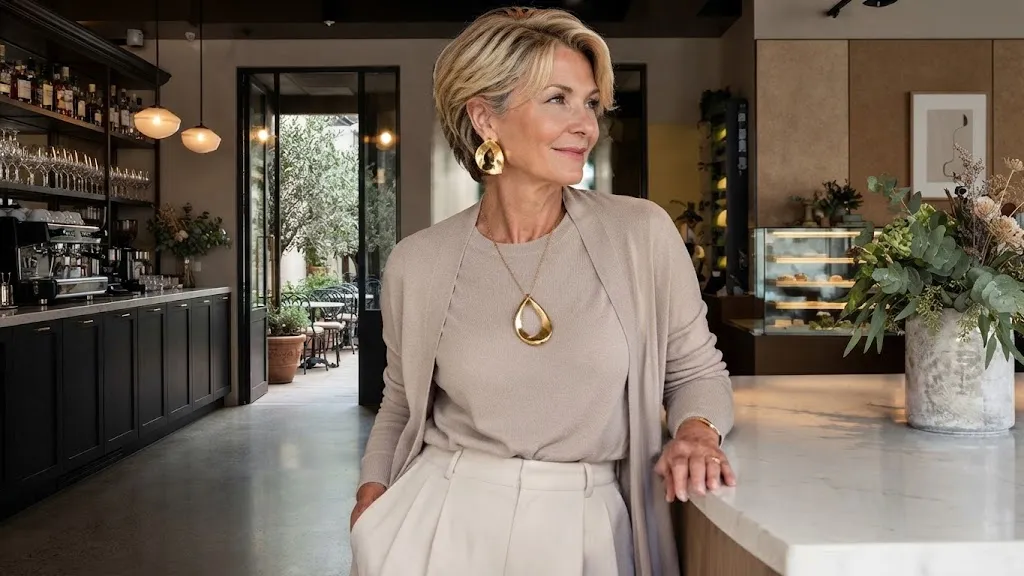
The secret to styling statement jewelry is choosing one standout piece to anchor your entire look. Bold accessories shine brightest when they are given room to take center stage instead of fighting for attention with too many other dramatic items.
For instance, if you decide on large, eye-catching earrings, you can easily skip the heavy necklace. A sculptural cuff looks far more striking when paired with simple studs rather than competing with a chaotic stack of heavy bracelets, rings, and chains of equal weight.
This does not mean you are restricted to wearing just a single item of jewelry. The real trick lies in pairing one dominant hero piece with quieter, understated supporting accents.
A bold pendant necklace looks effortless next to tiny hoops and a classic watch, while oversized earrings pair beautifully with a delicate chain. Ultimately, playing with contrasting scales is what keeps your look intentional, balanced, and effortlessly chic.
Here is a useful way to think about visual balance.
Statement Piece Balance: A Style Guide
It is not about chasing minimalism just to have empty space. It is about creating true clarity through visual hierarchy. When your design guides the eye effortlessly, even the boldest accessory feels calm, balanced, and deeply sophisticated.
Give Your Statement Pieces Room to Breathe
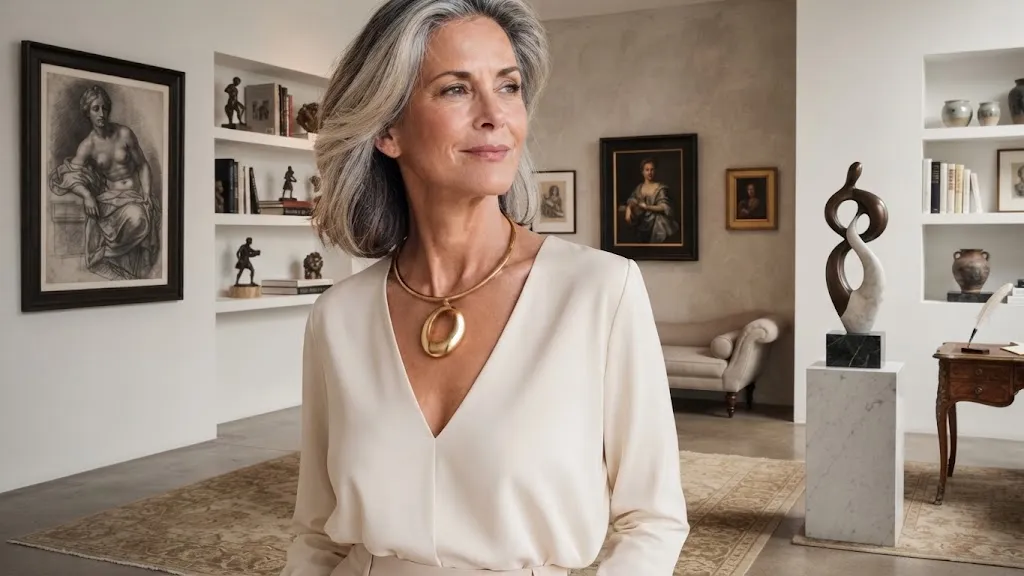
Bold statement jewelry needs a little breathing room to truly stand out. This is especially true for necklaces, where the neckline of your top or dress acts as the ultimate frame for the piece. A substantial necklace always pops best against clean, simple backdrops like a classic crew neck, an open shirt collar, a simple V-neck, or a plain scoop neck. Simply put, the less decorative your outfit is, the more clearly your jewelry’s shape will shine.
On the flip side, busy details like ruffles, bows, heavy embroidery, lace panels, or intricate collars will constantly fight for attention against a large necklace. If you love both elements, you don’t have to give either one up.
you might just find that bold statement earrings pair much better with a detailed blouse, while your favorite necklace is saved for a simpler top.
Fit is also crucial, so always pay attention to where a necklace ends. A pendant that rests entirely inside an open neckline looks intentional and connected to the outfit, whereas one that awkwardly overlaps the edge of the fabric can disrupt the overall look.
Ultimately, your jewelry should complement your personal frame rather than follow rigid rules about age. If tiny pieces tend to get lost on you, don’t be afraid to try a bit more scale. If heavy pieces feel uncomfortable or overpowering, look for larger designs crafted from lightweight materials.
The secret to effortless style is choosing the scale that feels natural on you, not the one someone else says you should wear.
Let Simple Outfits Serve as Your Best Canvas
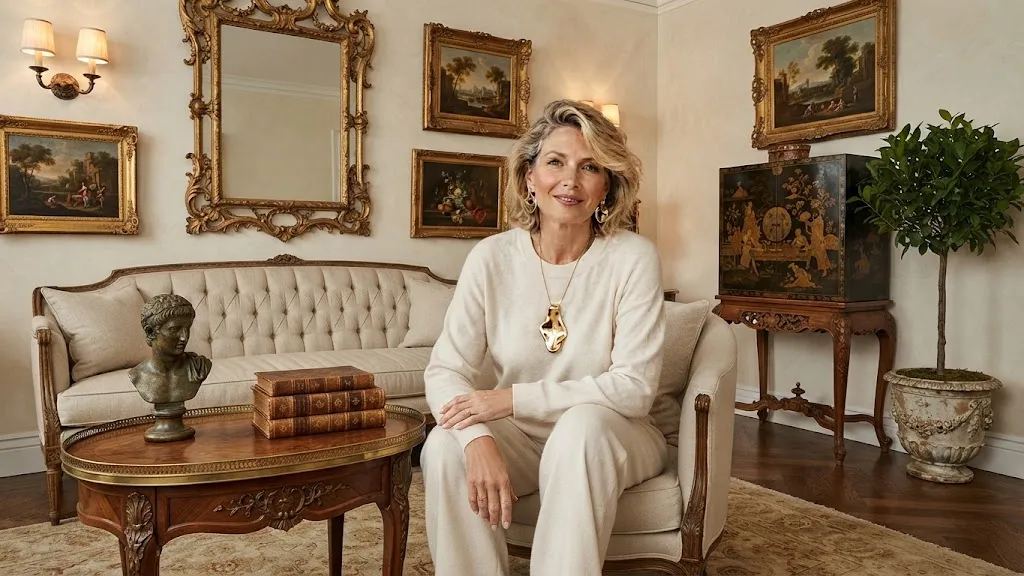
Statement pieces are wardrobe MVPs because they can completely transform everyday basics.
Instead of investing in a complicated, one-off outfit for every lunch, dinner, or gathering, you can use your accessories to completely shift the mood of a clean canvas like a white button-down, a dark knit top, a simple dress, a fine sweater, or a plain blazer.
For instance, a classic black knit dress feels entirely different when styled with bold, gold sculptural earrings compared to a long, colorful pendant. Similarly, a basic white shirt and jeans can transition seamlessly from running morning errands to meeting friends for lunch simply by adding a statement cuff, chic loafers, and jewelry with a little presence.
This versatility makes statement jewelry especially powerful in a capsule wardrobe, giving simple clothing endless variety without requiring a closet full of extra garments.
When you need a quick, foolproof starting point, try pairing a crisp shirt with straight-leg jeans and large earrings, a fine knit with tailored trousers and a sculptural necklace, a simple midi dress with a cuff bracelet and studs, a blazer and plain T-shirt with a pendant, or a monochrome look with a single colorful accent piece.
When it comes to building stylish, memorable outfits, the standout detail rarely has to be the clothing itself. Often, it is a strong accessory that gives even the simplest pieces their signature personality.
Balance the Weight, Match Your Jewelry to Your Outfit

Jewelry carries a distinct visual weight, much like your clothing. A chunky resin bangle naturally makes a stronger statement than a delicate chain, just as a bold metal collar necklace feels heavier and more prominent than a minimal, small pendant.
Your wardrobe follows the exact same rule. Tailored blazers, leather jackets, heavy wool coats, and thick knit sweaters carry significantly more visual weight than soft silk blouses or lightweight cotton shirts.
Balancing these levels naturally ties your entire outfit together.
Before choosing your accessories, take a quick look at the fabric and structure of what you are wearing. This simple guide will help you get it right.
Clothing & Fabric Style Guide
You don’t need to match everything down to the exact detail. Instead, think of it as a visual conversation between your pieces. Your accessories should feel substantial enough to hold their own alongside your clothing, rather than looking lost, fragile, or completely disconnected from the rest of your look.
Why Color Makes Bold Jewelry Much Easier to Style

Making a statement with your jewelry doesn’t automatically require loud or bright colors. Size, unique shapes, tactile textures, and a striking shine can all pack just as much punch. If bold accessories feel a bit intimidating, start by choosing a color that is already part of your wardrobe. Neutral or classic tones like gold, silver, tortoiseshell brown, black, cream, deep green, or warm amber bring plenty of drama without turning into a styling headache.
Monochromatic outfits offer a fantastic canvas when you want to experiment with colorful pieces. Pairing navy with turquoise highlights, cream with warm metallics, or an all-black look with a rich red accessory gives the eye a single, clean focal point.
If your clothes already feature a mix of colors, try pulling one shade directly from the print into your jewelry instead of tossing in an entirely new, competing hue.
color note:When it comes to color pairing, perfection isn’t required—matching the general temperature of your outfit often feels much more effortless and relaxed.
Warm shades like brown, rust, olive, and cream naturally harmonize with warm metals, while charcoal, navy, icy blue, and black look crisp and sharp next to cooler metallic tones.
Remember, these are meant to be starting points rather than rigid rules. If silver happens to look stunning against your warm-toned blouse, trust your eye and wear it.
How to Pair Bold Prints with Statement Jewelry Without Clashing
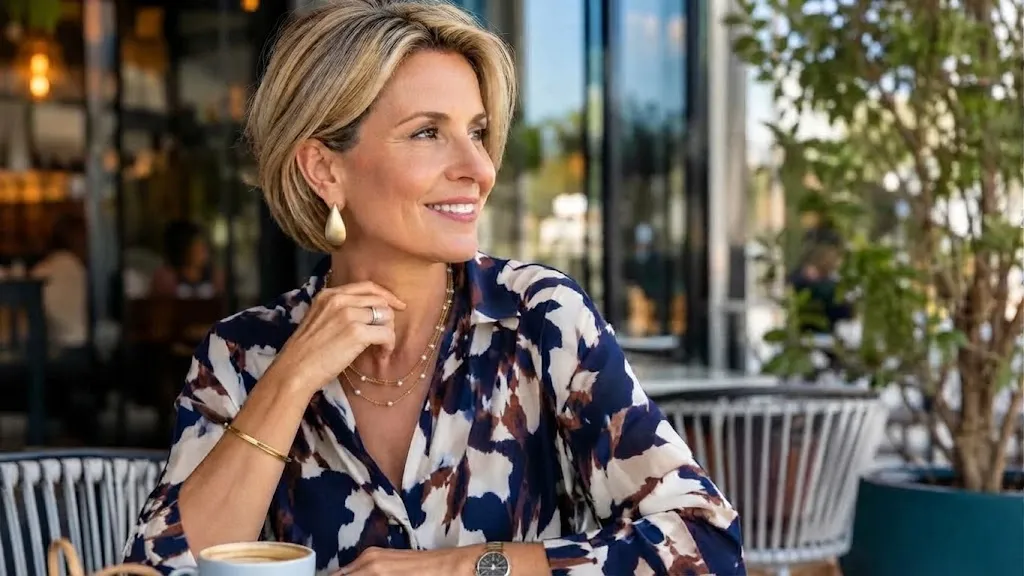
Wearing prints doesn’t mean you have to shy away from bold jewelry altogether; the real challenge is avoiding visual competition.
A large, graphic print naturally creates a lot of movement, and pairing it with equally complex accessories can leave the eye overwhelmed with nowhere to rest. For busy prints, clean and simple shapes usually work much better than intricate, detailed pieces.
On the flip side, small and evenly repeated prints can often handle a substantial necklace or a striking pair of earrings with ease.
If something feels a bit off when you check the mirror, tweaking just one element is usually all it takes to fix it.
This quick guide comparing old styling rules to fresh approaches can help you navigate whenever an outfit feels a little too busy.
Jewelry Rules: Old vs. Useful Approach
This softer, more flexible approach leaves plenty of room for your personal style to shine through. Dressing stylishly at any age becomes so much easier the moment you stop treating fashion as a strict list of restrictions and start focusing on proportion and balance instead.
Why Bold Jewelry Sometimes Feels Overwhelming
Most overloaded outfits don’t suffer from one massive mistake; they simply feature too many strong details fighting for attention at the same time.
Fortunately, a few quick adjustments can easily fix the balance:
- Too many oversized pieces at once: Keep your absolute favorite statement item and scale down everything else.
- A detailed neckline paired with a chunky necklace: Swap the necklace for statement earrings, a cuff, or a ring so the neckline has room to breathe.
- Bold jewelry with very busy prints: Opt for a cleaner, simpler jewelry shape or pick up just one color from the print.
- Too much shine everywhere: Tone down the sparkle by pairing shiny jewelry with matte fabrics like denim, cotton, linen blends, or soft knits.
Of course, comfort matters just as much as style. Heavy earrings that start hurting after twenty minutes or a necklace that constantly needs fixing will rarely become pieces you actually reach for.
For a comfort upgrade: look for lightweight materials like hollow metal, resin, wood, or fabric-covered beads whenever you want a larger scale without the heavy drag.
The Ultimate Everyday Formula for Styling Statement Jewelry Over 50
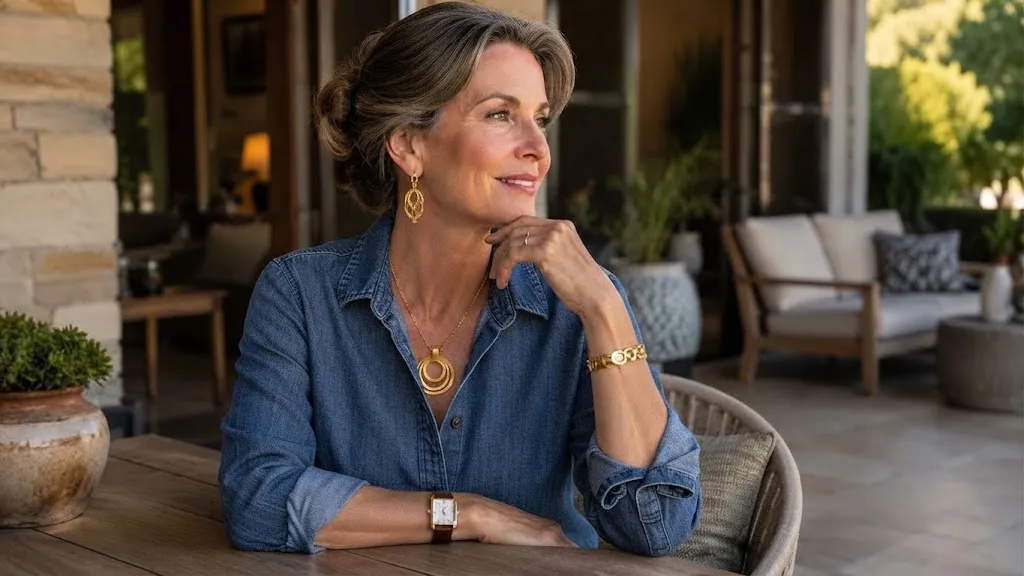
When you are standing in front of the mirror wondering whether your outfit needs a little more or a little less, you can rely on one simple styling formula:
Simple base + one strong jewelry piece + one quiet supporting accessory
For instance, this could look like dark trousers paired with a cream knit, striking sculptural earrings, and a slim watch. Or, it could be straight jeans and a crisp white shirt finished with a bold pendant and small studs.
In this mix, your clothing provides a calm and steady structure, the statement piece brings in your personality, and the smaller accessory ensures the look never feels unfinished.
The beauty of this approach is how easily it adapts to your week.
A statement necklace can effortlessly elevate a knit and trousers for dinner, while a pair of large earrings can make a casual T-shirt and jeans feel instantly pulled together for lunch. The formula stays consistent, even when the pieces change.