Scarf Styling for Women Over 50 That Moves Past the Old Neck Knot
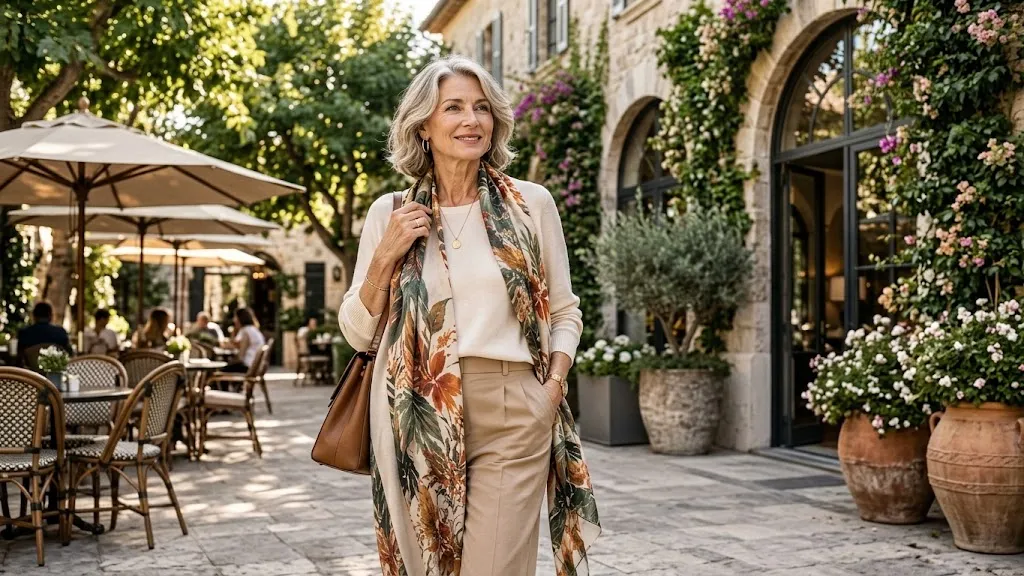
Scarf styling women over 50 can lift an outfit in seconds, but the usual tight neck knot can also make a good outfit feel more formal, fussy, or dated than you meant it to.
For many women over 50, the trouble is not the scarf itself. It is working out how to wear one with modern jackets, relaxed knits, wider trousers, simple dresses, and the pieces that now shape stylish outfits for women over 50.
The good news is that you don’t need tricky tying skills. Once you get scale, fabric, drape, and placement, the same scarf can add color, soften a neckline, balance your shape, or make a plain outfit feel far more thought-through.
Why the Tight Neck Knot Can Feel Too Dressy Now
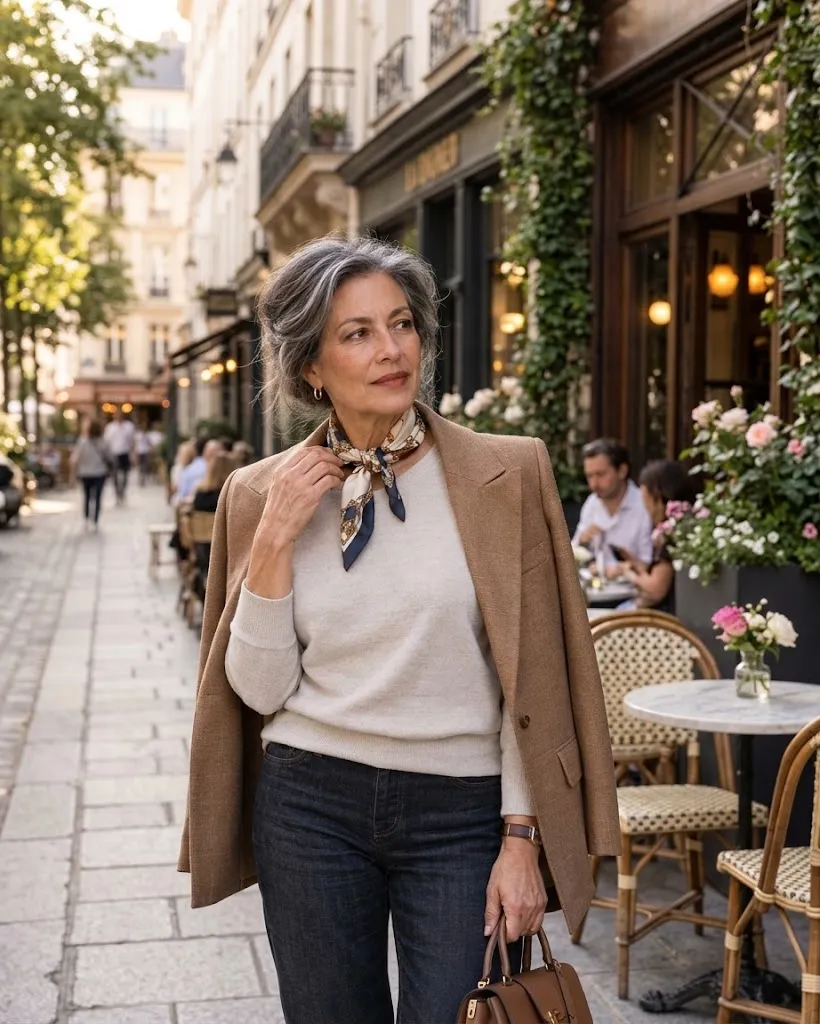
A small scarf tied snugly at the throat can still look lovely, most of all with a crisp shirt or a plain crewneck. Trouble starts when the knot steals the show instead of sitting quietly as part of the whole outfit.
Today’s clothes often have looser shapes. Wider trousers, straight jeans, roomy shirts, soft jackets, and longer cardigans usually look best when accessories move a little too.
A scarf that hangs, folds, or drapes gives the eye a long up-and-down or slanting line. That movement can make the whole outfit feel calmer and more current than a small knot parked right under the chin.
This doesn’t mean giving up classic scarf ties. It just means treating the neck knot as one choice, not the automatic answer every morning.
Check Scarf Size and Fabric Before You Style It
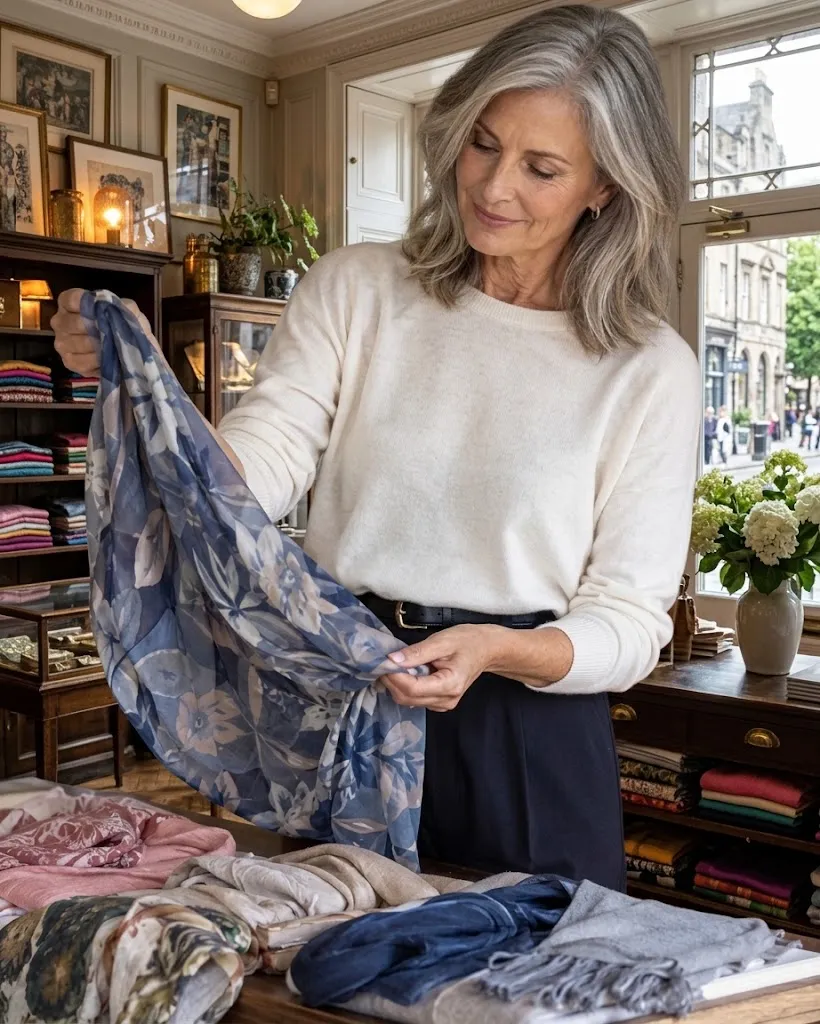
How a scarf acts matters more than the knot you pick. A heavy square silk scarf and a soft modal rectangle will make totally different shapes around the same jacket.
Smaller scarves work well when you want a neat accent. Bigger rectangular scarves give you more drape, which suits casual outfits, coats, long cardigans, and simple dresses best of all.
Before you style a scarf, feel how the fabric moves in your hands. If it feels stiff and bulky folded up, it will most likely feel bulky around your neck too.
Here is a plain fabric and shape guide to make picking easier.
| Scarf Type | What to Look For | Why It Works |
|---|---|---|
| Soft silk square | Light fabric with fluid movement | Adds polish without creating much bulk |
| Long silk rectangle | Enough length to hang below the bust | Creates a clean vertical line |
| Modal or viscose scarf | Soft drape and light-to-medium weight | Comfortable for everyday casual outfits |
| Fine wool scarf | Thin weave rather than chunky thickness | Adds warmth without swallowing the neckline |
| Cotton scarf | Soft washed finish | Works well with denim, linen, and relaxed outfits |
Fabric note: If a scarf keeps making you adjust it, the fabric may be fighting the outfit. Softer materials usually sit more naturally and need less fussing.
Let Your Scarf Hang Long for Length and Ease
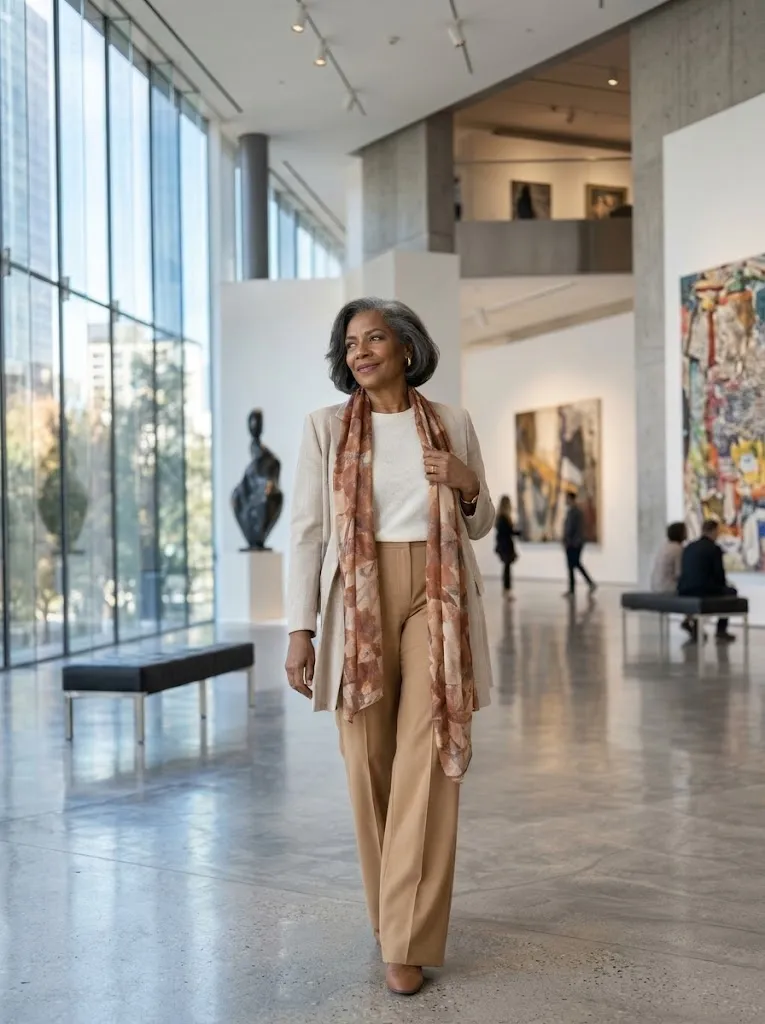
One of the easiest scarf tricks is also one of the simplest: stop tying it.
Lay a long scarf around the back of your neck and let both ends drop toward the front. Right away you get two vertical lines that can break up a sweater, button-down shirt, knit dress, or plain jacket.
This works best of all when the rest of the outfit feels wide to the eye. A relaxed sweater with straight trousers, for one, gains a bit of shape from the long line of the scarf.
You can also toss one end lightly over one shoulder. The slanting shape brings movement to your upper body with no tight focal point at the neckline.
With a blazer or coat, try tucking the scarf under the lapels instead of wrapping it over everything. A peek of print or color inside the jacket can look more refined than a big bundle around the collar.
Try this: Put your outfit on first, then add the scarf with no tie. Look at the full shape before you decide it needs another fold or knot.
Wear Your Scarf Off the Neck: Shoulder, Belt, and Bag Ideas
A scarf doesn’t have to sit around your neck at all. Moving it somewhere else can make an outfit feel fresh while still giving you the color or print you wanted.
A few handy options are:
- Over one shoulder: Drape a medium or large scarf over one shoulder with a sweater, simple dress, or long coat. Let it hang rather than arranging it too neatly.
- Under a belt: Place a long scarf over your shoulders and secure it lightly with a slim or medium-width belt. This works best when the scarf fabric is thin enough to lie flat.
- Around a bag handle: Use a smaller silk square on a plain leather or canvas bag when your outfit already has enough detail near the face.
- Across the shoulders: Open a larger square or rectangular scarf and wear it almost like a soft wrap over a sleeveless dress or fine knit.
The belt method helps most with a plain column of color, like navy trousers with a navy knit. The scarf brings in pattern while the belt stops the fabric from taking over your shape.
A bag scarf works for the opposite reason. It keeps color away from your face and neckline, which can help when you wear statement earrings, a patterned blouse, or a stronger necklace.
Pair Your Scarf With Necklines, Jackets, and Sweaters

Scarf styling gets much easier when you treat the neckline as part of the choice. The scarf and neckline should work together instead of fighting over the same small area.
A V-neck sweater already makes an open vertical shape. A long, loosely draped scarf can follow that direction with no need to fill the neckline back in.
Crewnecks give you more room to play. You might use a small silk scarf sitting just outside the collar, or pick a long rectangular scarf for a stronger vertical line.
With a button-down shirt, leave one or two buttons open and place the scarf inside the collar. This makes a softer look than wrapping the scarf tightly over the shirt collar.
Jackets call for slightly different thinking. A blazer usually looks cleaner when the scarf sits beneath the lapels, while a trench or plain wool coat can handle a longer scarf hanging outside.
Comfort upgrade: If bulky scarves make coats feel tight across the shoulders, switch to fine wool, silk, or modal. Warmth doesn’t always need thickness.
Use Color and Print to Pull a Simple Outfit Together
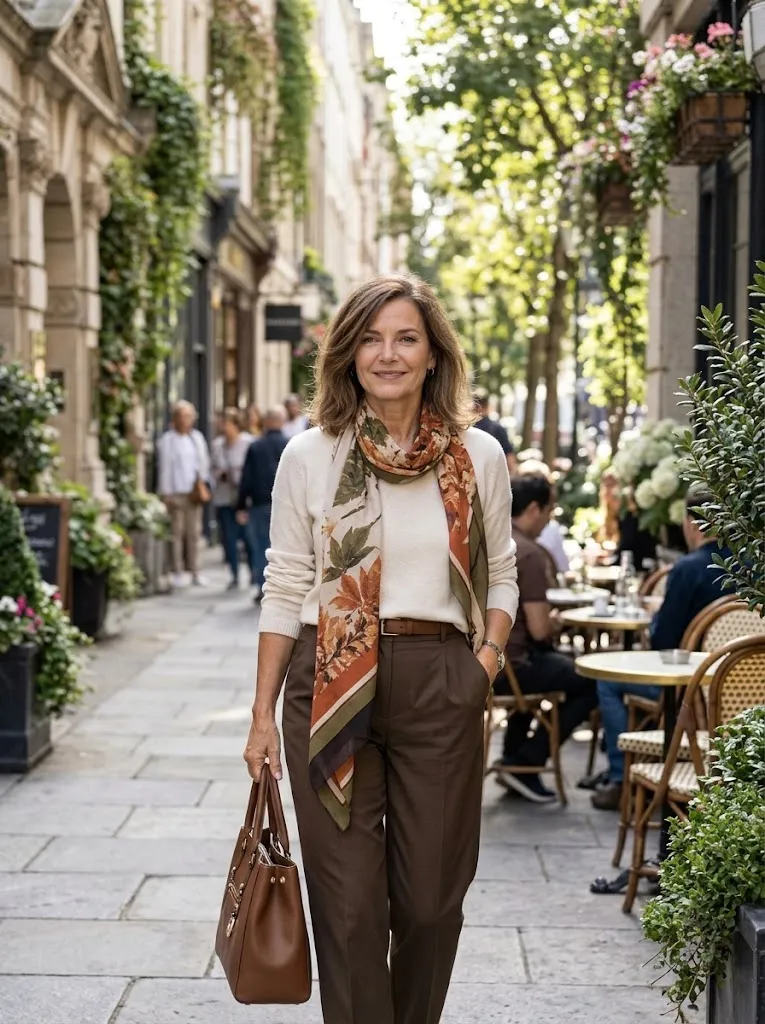
A scarf is most useful when it fixes a color problem instead of making a new one.
If your outfit feels flat, pick a scarf that repeats one color already in your clothing, shoes, or bag. That small link makes pattern feel planned instead of random.
You don’t need an exact match. A scarf with soft blue can work with navy trousers, while rust, cream, or olive can link beautifully with warm brown shoes.
This helps most when building stylish outfits for women over 50 from wardrobe basics. A scarf can shift the mood of the same shirt, trousers, and jacket with no need to buy another top.
The same base outfit can also move through different settings with a small scarf change.
| Base Outfit | Scarf Change | Where It Works |
|---|---|---|
| White shirt + dark jeans | Printed silk square | Lunch or casual dinner |
| Fine knit + trousers | Long tonal scarf | Work, appointments, travel |
| Simple midi dress | Soft patterned wrap | Dinner or evening event |
| Blazer + tee + jeans | Slim silk rectangle | Smart casual plans |
| Coat + knit + trousers | Fine wool scarf | Cold-weather errands |
Color note: If bold prints feel like too much, start with a scarf that stays within two or three related colors. You still get interest with no need for the accessory to take over the outfit.
Fix the Habits That Make Scarves Look Dated
A scarf rarely looks dated on its own. It is usually the mix of scale, knot, print, and nearby clothes that changes the effect.
Small tweaks are often enough. There is no need to throw away scarves you still enjoy.
This quick comparison can help when something feels slightly off in the mirror.
| If This Feels Off | Try This Instead |
|---|---|
| Tight knot directly under the chin feels too formal | Loosen the scarf or let one end fall lower |
| Large scarf overwhelms a small neckline | Switch to a slimmer rectangle or softer fabric |
| Busy scarf competes with a printed blouse | Pair the scarf with a solid top instead |
| Scarf and chunky necklace fight for attention | Choose one statement near the face |
| Perfectly symmetrical ends look too arranged | Let one side hang slightly longer |
Another common snag is piling too many traditionally polished pieces together at once. A silk scarf, pearls, structured handbag, tailored jacket, and dressy shoe can sometimes feel more formal together than any one piece would alone.
If that happens, keep the scarf and relax something else. Try straight jeans instead of dress trousers, loafers instead of pumps, or a soft knit instead of a crisp blouse.
That mix of polished and relaxed pieces is often what makes modern dressing over 50 feel natural instead of overly styled.
A Scarf Formula You Can Use All Week
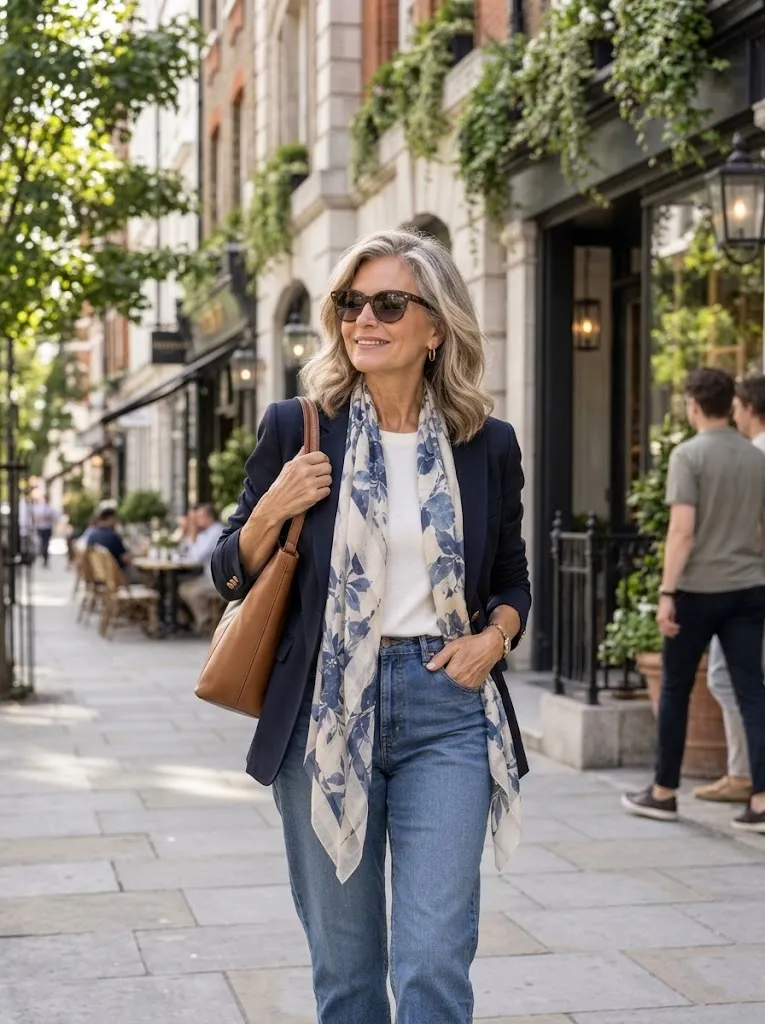
You don’t need a new scarf technique for every outfit. A dependable personal formula is far more useful.
Formula: simple base + one relaxed layer + softly draped scarf
Try straight jeans with a fine knit, a blazer, and a long silk scarf left open. Swap the jeans for trousers, the blazer for a cardigan, or the knit for a button-down while keeping the same basic structure.
For warmer weather, use a linen shirt, ankle trousers, and a lightweight scarf tied loosely to your bag. In colder weather, keep the formula but switch to a fine wool scarf under a coat.
The aim is not to make the scarf the most eye-catching part of the outfit. It should help the clothes look linked, balanced, and easy to wear.
FAQs
How can women over 50 wear a scarf and still look modern?
Loosen the style instead of dropping the scarf. Long hanging ends, soft folds, one side a bit longer, and scarves tucked under jacket lapels often look more relaxed than tight, neat knots.
Wear the scarf with plain modern basics, so it looks planned and not too formal.
Which scarf shape suits a round neckline best?
An open long scarf can make a straight line down from a round neckline. A small silk square just outside the collar also works if you want less cloth.
The right pick depends more on the size of the top and the scarf than on any fixed neckline rule.
Can scarves and necklaces be worn together?
Yes, but each piece needs its own space. A thin chain goes well with a softly hanging scarf, while a big bold necklace may look better with no extra cloth in the same area.
If the pair looks busy, wear the scarf on your bag or shoulders instead.
What is the best way to wear a scarf with a blazer?
Place a long scarf under the blazer lapels and let the ends fall straight down. A small silk scarf can also sit inside an open shirt collar under the blazer.
Both ways keep the blazer shape clear instead of hiding it under cloth.
Do big scarves still look stylish?
Yes, most of all when the cloth is soft and the style is simple. Big scarves work well as wraps, over coats, or belted lightly over a dress or knit.
If a big scarf takes over the outfit, choose a thinner cloth or show more of the clothes underneath.