
How to Clean Out Your Closet Over 50 With Zero Regrets

A closet can be packed full and still leave you staring at it thinking you’ve got nothing to wear. Some things don’t fit comfortably anymore, others belong to a chapter of life you’ve closed, and a few are just too meaningful to hand over.
For many women over 50, clearing out a closet hits harder emotionally than you’d expect.
The toughest part is usually choosing what earns its place. That pricey jacket, the dress from a big night out, or the jeans you’re saving for “someday” can turn every single choice into a debate.
Learning how to declutter your closet over 50 doesn’t mean tossing half of it or swapping everything for plain basics.
Start With What You Truly Wear, Not What You Think You Should

The fastest way to mess up a closet cleanout is to yank everything out and start judging piece by piece. A smarter first move is to notice which clothes already make mornings easy.
Look at what you grab in a normal week. Your go-to trousers, a soft cardigan, broken-in jeans, or a shirt that fits just right say more about your real style than a closet full of once-in-a-while outfits.
These pieces have already earned their keep. They fit your everyday life, feel good on, and play well with the rest of your closet.
Your closet might also need to match a different life than the one you had ten years back. Maybe you work less, travel more, or reach for relaxed clothes over formal ones these days.
There’s zero reason to hang on to a full lineup of office suits when your days run on lunches, errands, hobbies, and family time.
Try this: Before you pull a single thing out, pick five outfits you honestly love wearing. Study their colors, fits, fabrics, and shoes — they’re telling you exactly what belongs in your closet.
The point was never to own less just for the sake of it. It’s to build a wardrobe that fits the woman you are right now.
Try It All On Before You Decide What Stays

Something can look perfect on a hanger and feel like a different garment the second it’s on your body.
This matters even more after 50, when shifts in shape, comfort, and taste change how familiar clothes feel. The thing that fit like a dream years ago might tug at the waist or sit oddly on the shoulders now.
Before you rule on any piece, try it on with the shoes and undergarments you’d actually wear with it.
Walk around, sit down, lift your arms, and watch how the fabric hangs. Good clothes let you enjoy your whole day without fidgeting.
Watch for these little trouble spots:
Shoulders: jackets and tops should sit easy — no pulling, no drooping.
Waistbands: trousers and skirts should feel good standing and sitting.
Fabric: check for itch, stiffness, pilling, and tired elastic.
Length: notice where tops, skirts, and trousers end against your shoes.
Condition: look for fading, stains, loose seams, and broken closures.
A piece doesn’t have to fit the way it did a decade ago to stay. It just has to feel good and work for your life today.
Which Clothes Are Worth Fixing Up?
Some clothes need one small fix to become favorites again. Others would take so much work that the money and hassle stop making sense.
Keep this cheat sheet handy while you try things on.
| Garment | What to Check | Smartest Move |
|---|---|---|
| Tailored blazer | Shoulders fit, but the sleeves run long | Think about shortening the sleeves |
| Favorite jeans | Waist feels snug or the fabric’s gone limp | Try a new fit or let them go |
| Quality dress | Fits nicely, but the hem looks off | A simple hem fix may do it |
| Cashmere sweater | A little pilling, but still cozy | De-pill it and keep wearing it |
| Leather shoes | Look fine, but hurt to walk in | See if the fit can be safely improved |
Fit note: Don’t hang on to uncomfortable clothes just because they cost a lot. A cheaper piece that fits like it was made for you is worth far more day to day.
If you still adore something but can’t wear it comfortably, set it aside for an honest alteration decision instead of hanging it right back up untouched.
Sort Into Four Clear Piles Instead of Rushing Your Choices
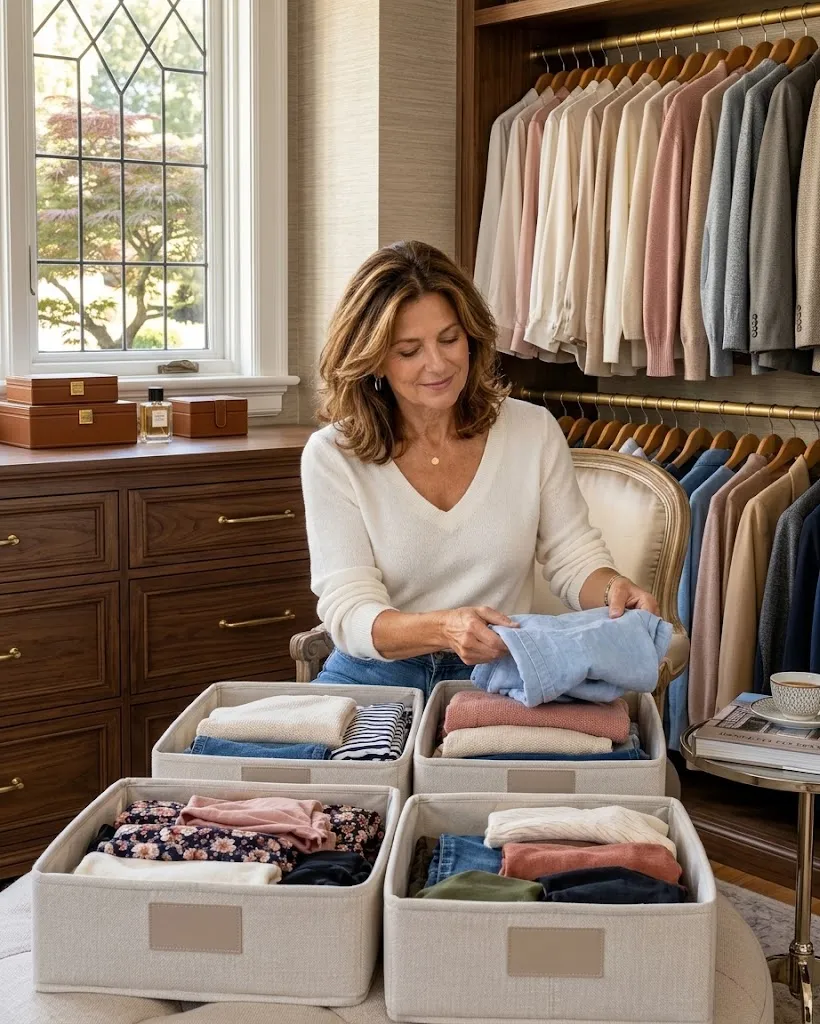
Sort Into Four Clear Piles Instead of Rushing Your Choices
One reason closet cleanouts wear you out: every single garment seems to demand an instant yes or no.
But clothing calls aren’t always that black and white. Some things need mending, some are seasonal, and some deserve a slower think.
Instead of deciding it all in one go, build four clear piles.
Keep and wear: These are the clothes that fit well, suit your life now, and mix with pieces you already own.
They don’t have to be new or on-trend. If a ten-year-old cardigan still looks great and lifts your mood, it has earned its hanger.
Repair or alter: This pile is for things you’d happily wear if one little flaw got fixed.
A missing button, a loose hem, or trousers that run a touch long can be worth fixing. Just give yourself a firm deadline so this stack doesn’t turn into another forgotten corner.
Donate, sell, or pass along: Clothes that are clean and in solid shape may thrill someone else, even if they’ve stopped working for you.
Think about donating everyday pieces, selling anything with real resale value, or handing a special item to a relative who’d truly love it.
Decide later: This is the pile that makes a regret-free declutter possible.
Grab a small box for the pieces you’re attached to or honestly torn about. Write a date on it and open it again in 30 to 60 days.
If you haven’t reached for or missed something by then, saying goodbye the second time around usually feels easier.
What to avoid: Don’t build a bottomless maybe-pile. Cap it at one fixed box so it pushes your decisions forward instead of stalling them all.
Keep the Sentimental Pieces Without Keeping Them All

Keep the Sentimental Pieces Without Keeping Them All
Some clothes hold memories that have zero to do with fashion.
The dress you wore to your daughter’s wedding, the coat from an unforgettable trip, or your mother’s beautiful blouse can mean more than everything else hanging in there.
Treating those pieces like ordinary castoffs is a fast track to regret.
So pull the sentimental ones out from your everyday clothes. They do a different job and shouldn’t have to fight for the same hangers.
A small memory box, a garment bag, or one dedicated shelf gives the keepers a proper home of their own.
One special scarf can absolutely stay even if you wear it once every few years. Twenty near-identical scarves you haven’t touched in a decade? That’s a different story.
Drop the Old Closet Rules That No Longer Fit Your Life
A lot of classic decluttering advice sounds smart — and still steers you straight into rushed choices.
A gentler approach guards the pieces that matter without letting you keep the whole store.
| ✕ Old Closet Rule | ✓ A Better Move After 50 |
|---|---|
| Toss anything unworn for a year | Weigh seasonal wear, big events, and sentimental value |
| Stick to neutrals only | Keep the colors that flatter you and lift your mood |
| Dump everything that doesn’t fit | Consider honest alterations and real future needs |
| Each piece must earn its keep | Save a little room for meaningful keepsakes |
| Swap old clothes for trendy ones | Keep the older pieces that still fit, look good, and work |
Style tip: Try photographing special garments before they leave your hands. You keep the memory without storing every last piece forever.
You can also save one meaningful piece from a group instead of the entire group.
Say you keep one favorite silk blouse from your working years — that feels far more personal than six suits you’ll never wear again.
Build Your Daily Wardrobe Around Outfits That Already Work

Build Your Daily Wardrobe Around Outfits That Already Work
Once you know which clothes you love, the next job is making sure they actually work as outfits.
A closet can hold dozens of lovely solo pieces that never turn into real outfits. That usually happens when you shop one item at a time.
Quit counting garments and start thinking in combinations instead.
A navy cardigan could pair with straight-leg jeans, cream trousers, and a printed midi skirt. A white shirt might suit all three bottoms with nothing but a shoe swap.
Those little connections make your wardrobe feel twice as big without buying a thing.
Find Your Own Outfit Formula
A solid outfit formula is just a combo of pieces you like wearing together.
Swap the colors, fabrics, and accessories all you want while the basic shape stays familiar.
Here are a few combos worth stealing.
| Occasion | Easy Outfit Formula | Why It Works |
|---|---|---|
| Daily errands | Straight-leg jeans + cotton knit + loafers | Comfy, relaxed, and pulled together |
| Lunch with friends | Wide-leg trousers + soft blouse + structured bag | Adds shape without feeling tight |
| Casual get-together | Midi dress + cropped cardigan + flats | Comfortable with a polished edge |
| Travel day | Stretch trousers + breathable tee + light jacket | Layers easily and moves with you |
| Smart casual event | Dark trousers + silk-blend top + tailored blazer | Dressy minus the formal fuss |
See how a few heroes show up in outfit after outfit? That’s the backbone of a capsule wardrobe over 50 that actually works.
You don’t need a magic number of shirts, trousers, or dresses. The right count hinges on your laundry rhythm, your weather, and the shape of your real days.
Color note: Two or three core neutrals make getting dressed almost automatic. Then weave in the shades you love — burgundy, sage green, dusty blue, soft pink — so it still feels like you.
Before a maybe-piece earns its hanger, build two or three full outfits around it using only clothes you already own.
If you adore it but can’t pair it with a single thing you own, ask whether it fills a genuine gap — or just looked pretty alone on the rack.
Dodge the Closet-Clearout Mistakes That Cause Regret
Decluttering feels exciting at first. Once the donation bags start stacking up, it’s tempting to keep going until every shelf looks almost empty.
But an extreme clear-out isn’t automatically a win.
The real goal: clear what no longer serves you while keeping enough range to dress well for your actual life.
A few classic mistakes deserve a wide berth.
Throwing Out Clothes Simply Because They’re Not Trendy
Trends turn over, but well-made clothes keep pulling their weight for years.
A classic trench, tailored trousers, or a beautiful knit doesn’t turn worthless overnight just because a new silhouette is having a moment.
Try this: Before an old favorite hits the bag, test it with fresher shoes, a different belt, or a new combo from your closet.
Sometimes the piece was never the problem. It was just styled exactly the way it was five years ago.
Giving Away Your Whole Special-Occasion Wardrobe
You might rarely hit weddings or formal dinners these days, but that doesn’t mean a dressy moment will never come up.
One or two versatile pieces can spare you a frantic last-minute shopping run.
A simple dark dress, elegant trousers, or a dressy blouse can stretch across several events with a switch of accessories.
Keeping It Just Because It Was Pricey
What you paid for a garment doesn’t make it comfier or more useful right now.
If a designer jacket hasn’t fit right in years, keeping it won’t win that money back.
Sell it if the resale makes the trouble worthwhile. If not, passing it on usually feels better than watching it hog precious closet space.
Tossing Clothes Before You Check What You Need
Go easy on donating the workhorses just because they don’t spark joy.
A raincoat, winter layers, comfortable walking shoes, and basic layering tops might bore you, but replacing them later gets expensive fast.
Take stock before you cut the useful stuff — especially the pieces you only need in certain seasons.
Stay Organized Without Redoing Your Whole Closet Each Season

The best system is the one you can live with — no full-weekend reorganization required.
Once the sorting is done, arrange everything so your most-worn pieces are the absolute easiest to grab.
Keep everyday trousers, favorite tops, and go-to jackets at eye level. Shift occasion wear and off-season stuff to the harder-to-reach spots.
Keep similar items grouped together — it makes it much easier to see what you already own.
Stash all your cardigans in one spot instead of scattering them across shelves, for instance. You’ll spot fast if you own five near-twins.
Your 15-Minute Closet Check-In
Every few weeks, give your recently worn clothes a quick fifteen-minute once-over.
Ask yourself three quick questions:
- Did anything pinch, look tired, or fight me when styling?
- Is there one piece I keep dodging — and why?
- Did I stumble on a combo I want to repeat?
Drop anything that needs work into your repair-or-decide spot instead of pretending you didn’t notice.
You can also flip your hangers backward at the start of a season, then turn each one around as you actually wear it.
Come season’s end, the still-flipped hangers flag what deserves a second look. That’s a nudge, not an eviction notice.
Budget-friendly tip: After a big cleanout, don’t rush to buy replacements. Live in the smaller wardrobe a few weeks so you spot real gaps instead of shopping from habit.
A wardrobe that grows slowly around your needs beats one rebuilt in a single frantic shopping trip, every time.
FAQs
Quick answers to the questions women ask most about decluttering after 50.
How many clothes should a woman over 50 actually own?
Honestly, there’s no magic number — and anyone selling you one is guessing. Let your lifestyle, your climate, your laundry rhythm, and your taste make the call. Aim for enough comfortable outfits to cover your regular days, not some strict quota from a magazine.
What should I get rid of first when decluttering?
Start with the damaged pieces you won’t bother fixing, the clothes that feel miserable on, and the items you no longer enjoy wearing. Next, hunt down duplicates and anything that doesn’t suit your current routine. Save the sentimental and expensive decisions for later, once the easy wins are behind you.
How do I let go of clothes without the guilt?
Remember this: keeping an unworn garment never refunds what you paid or makes it useful. Selling, donating, or passing it along hands it a whole new purpose. And for the emotionally tricky ones, tuck them in a small maybe-box and revisit it in a few weeks.
Should I keep clothes that don’t fit anymore?
Holding on to a few meaningful pieces — or ones a tailor could honestly fix — is completely your call. But a closet crammed with uncomfortable clothes turns getting dressed into a daily frustration. Give the front row to what fits beautifully today, not to a someday size.
How often should I declutter after 50?
One seasonal pass is plenty for most closets, especially with quick monthly check-ins. No need to toss things every tidy-up. The goal is a closet that’s easy to use — one that tells you when your needs have shifted.