Best Colors for Warm Undertones Over 50: Shades That Make You Glow
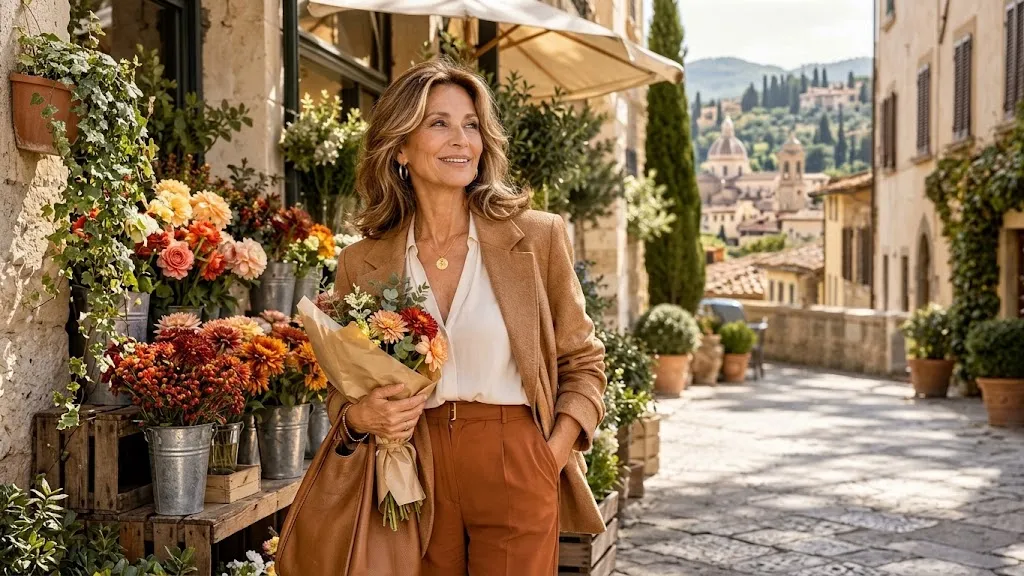
If you have warm undertones over 50, even a pretty outfit can look wrong when the color near your face makes you look tired or washed out. It feels worse when old favorite colors suddenly stop looking good on you.
After 50, new hair color, softer makeup, and less contrast can change how clothes look on you. Your undertone may still be warm — but you might need to adjust your shades a little.
Picking better colors is not about strict seasonal rules. The right shades make stylish outfits for women over 50 easier to build — because your clothes start working with your natural coloring instead of against it.
Start With the Colors Near Your Face
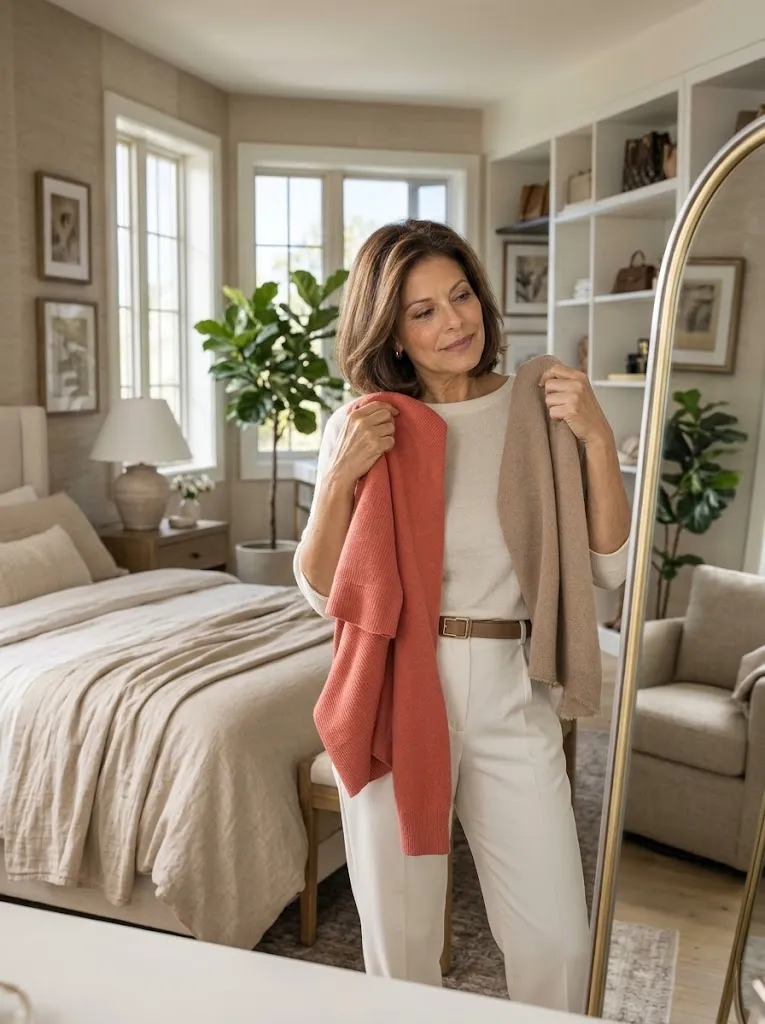
Warm undertones usually do well with colors that have a yellow, golden, peach, olive, or earthy feel. But not every warm color will suit you the same.
The easiest test is to compare. Hold two similar colors near your face in daylight — like bright white next to ivory, or cool raspberry next to warm coral.
See which one makes your skin look more even and your eyes stand out. The better color usually feels softer and more like you.
Don’t rely only on vein color or the old rule that gold jewelry means warm undertone. Those hints help, but comparing clothes on yourself works better.
Hair matters too. Gray, silver, highlighted, red, brunette, or blonde hair can all change the contrast around your face.
So your best palette may get softer, deeper, or a bit brighter — even if your warmth stays the same.
Try this: take five tops from your closet and take a photo of yourself in each one near a window. Looking at the photos together makes the best colors easy to spot.
Warm Neutrals Build the Easiest Base

The most useful warm colors are often not the bold ones. Cream, camel, chocolate, warm taupe, tan, and soft olive can build a very useful wardrobe base.
They work because they mix easily without harsh contrast. They also make denim, prints, jewelry, and brighter accent colors easier to pair.
If black feels too harsh near your face, you don’t have to give it up. Keep black pants, skirts, boots, or bags — and wear a warmer color on top.
Here’s a good starting list for your warm neutral palette:
These are great for a capsule wardrobe over 50 because you can repeat them. A camel jacket, ivory knit, chocolate pants, and olive overshirt can make many outfits without looking boring.
One fabric tip: matte wool, brushed cotton, suede, linen blends, and soft knits make earthy colors look rich. Very shiny fabrics can make camel, bronze, or mustard look louder than you want.
Earthy Shades Give Warmth Without Being Too Loud

Rust, terracotta, cinnamon, paprika, ochre, and burnt orange are perfect for warm undertones. Their brown or golden base keeps them softer than strong primary colors.
You don’t have to wear them from head to toe. One earthy piece can add just enough color to a simple outfit.
A rust cardigan over an ivory top goes well with dark denim. Terracotta pants look neat with cream knitwear and tan loafers.
Ochre is great for scarves, jackets, prints, or bags when a full mustard sweater feels like too much.
Try these combos:
- Terracotta + ivory + cognac
- Rust + dark denim + camel
- Olive + cream + chocolate
- Paprika + warm navy + tan
- Cinnamon + soft beige + gold jewelry
These combos work because of balance. One richer color adds personality while the calm neutrals around it keep the look relaxed.
This is truly the easiest way to get chic outfits for women over 50 — more color when you want it, still neat and tidy.
Wear Reds, Pinks, Greens, and Blues in Warmer Tones

Warm undertones don’t mean you must live in beige and brown. You can wear plenty of stronger colors.
The trick is to pick the version of the color that already has warmth or softness in it.
Skip the blue-based cherry red — try tomato, brick, or poppy red. Swap icy pink for peach, salmon, coral, or warm rose.
Green is the most flexible. Olive, moss, khaki, warm forest green, and avocado usually look lovely next to warm skin.
Blue needs a bit more trial, but teal, turquoise, petrol blue, peacock, and soft warm navies can all look great.
Small expert tip: the name on the clothing tag matters less than the actual shade. Two sweaters both called “navy” can have very different undertones.
Hold the fabric next to cream, camel, or olive. If the blue looks calm and friendly next to them — not sharp — it will fit well in a warm wardrobe.
Too Cool? Just Shift the Shade, Don’t Drop the Color
Color advice feels annoying when it sounds like a long list of things you can’t wear anymore. You don’t need that.
Almost every color family has warmer and cooler versions. Moving one step toward warm usually fixes the problem.
Keep this quick comparison for shopping or closet cleaning:
You can still wear a cool color you love. Just move it farther from your face.
Cool gray pants can look nice with an ivory blouse. A lavender skirt looks better with camel shoes and a warm, soft cream knit.
This one habit makes dressing over 50 feel much less strict. Color becomes something you adjust, not a rule you must follow.
Connect Your Look With Jewelry, Prints, and Accessories
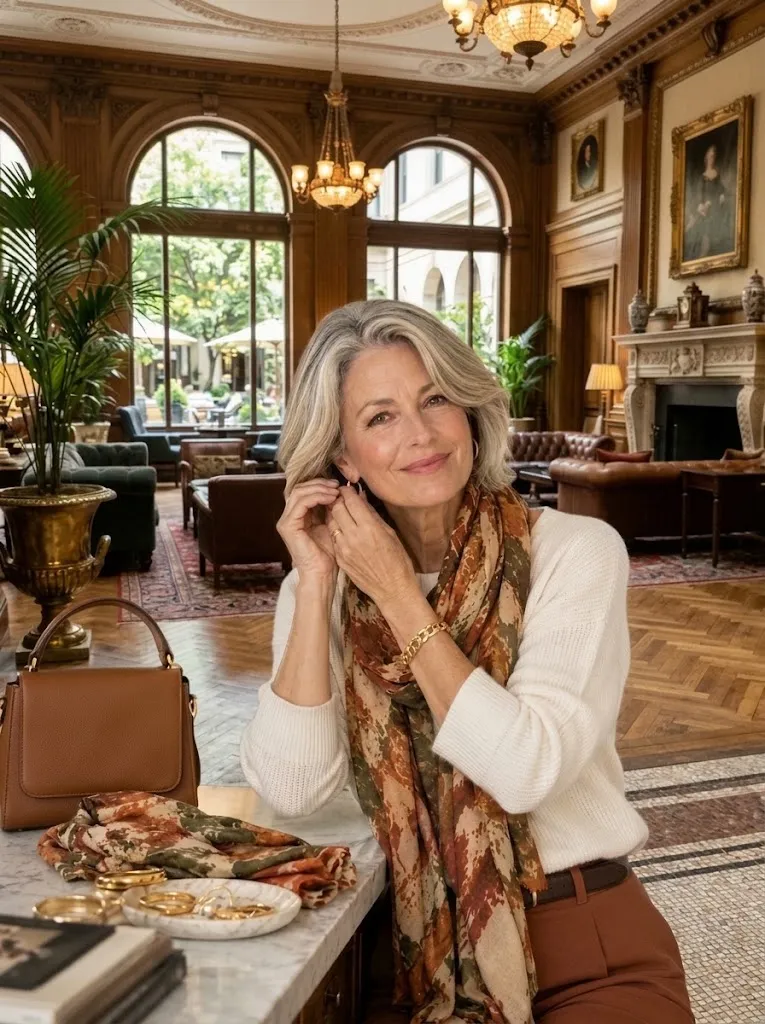
Accessories can save an outfit that feels almost right but slightly off.
Gold, bronze, brass, copper, tortoiseshell, cognac leather, and warm tan all blend easily with a warm palette. Mixing metals works too — especially if you already wear gold and silver.
Prints are another good bridge. A scarf with navy, rust, ivory, and olive can connect pieces that would otherwise clash.
When you choose a print, first check the color closest to your face. If that background suits you, the small cool colors inside the print hardly matter.
Money-saving tip: before buying anything new, try changing the scarf, earrings, necklace, or jacket around an outfit you already own. One warm accent can be enough.
This also makes stylish outfits for women over 50 easy to repeat. Keep the same simple base and just change the small details.
Make a Warm-Color Outfit Formula You Can Reuse
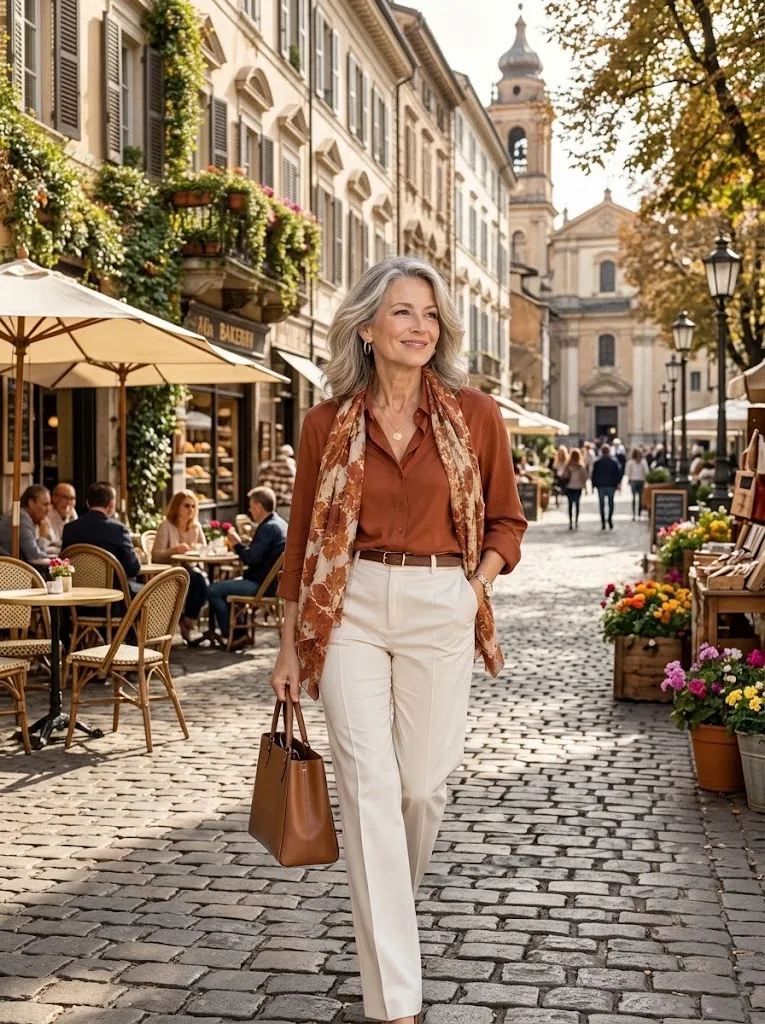
A good color palette should make your mornings easier. You shouldn’t need a color wheel every time you get dressed.
Start with one warm neutral, add one supporting color, and finish with one richer accent if you want more interest.
Here are some formulas you can adjust to pieces already in your closet:
Your own formula might be even simpler:
Warm neutral bottom + flattering near-face color + one matching accessory.
For example, wear chocolate trousers with an ivory blouse and a cognac loafer. Change the blouse to coral or teal the next day and the base still works.
That repeatability is the real magic — it turns color advice into a wardrobe system, not just another set of rules.