French Dressing Secrets for Women Over 50
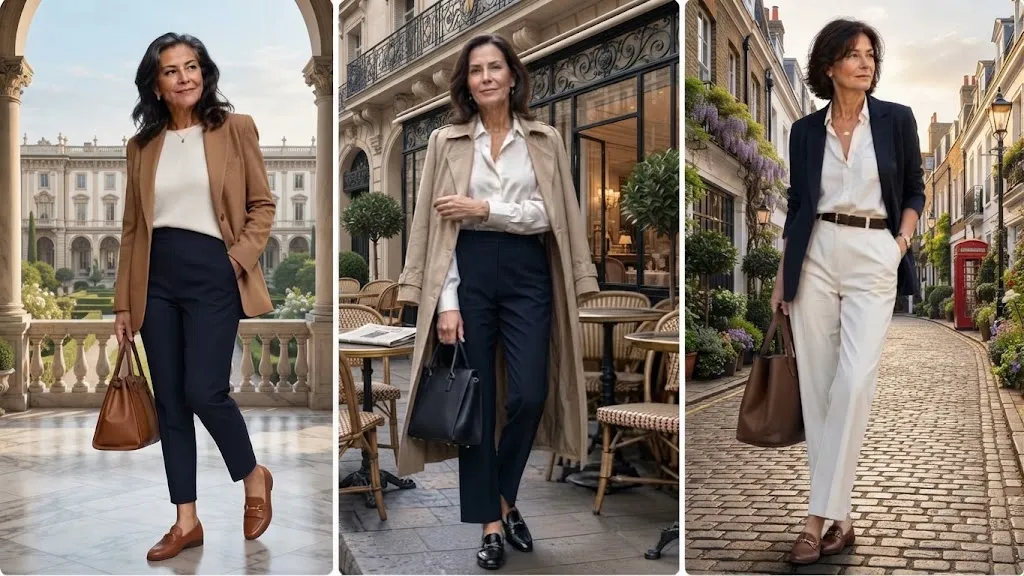
French style over 50 starts with a simple truth: shopping gets weirdly hard when everything in stores looks too young, too boring, or made for someone else’s life. You want to look stylish without running after every trend or wearing outfits that try too hard.
A French-inspired way of dressing can help here. It’s not about striped shirts or Paris clichés. It’s about holding back, getting the fit right, choosing good fabric, and knowing when to stop.
These ideas can make your mornings easier and keep your outfits full of character. No need for a whole new wardrobe. Small changes in shape, color, shoes, and final touches can make your old favorites look fresh and neat.
Start With Less, Not More: The French Way
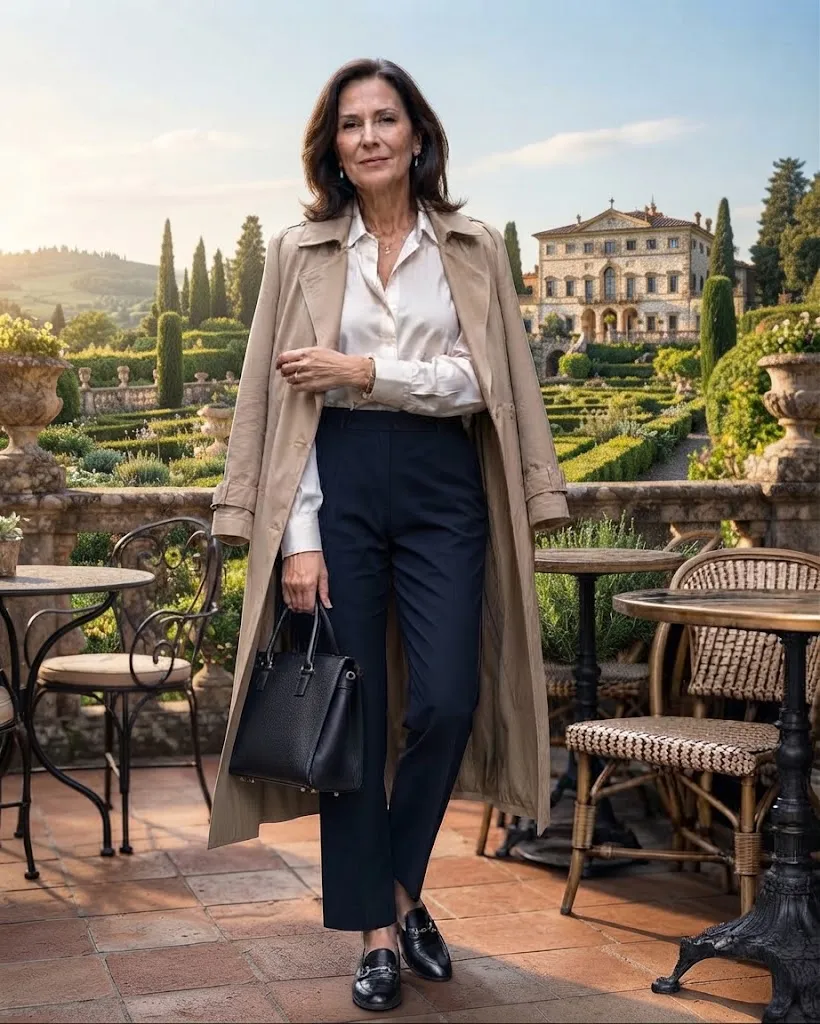
French-style outfits look simple because someone trimmed them down first. You may spot just three or four items, yet each one earns its place.
This doesn’t mean going beige, bare, or broke. It means letting the eye relax instead of forcing every piece, color, and trend to fight for notice.
A simple navy sweater and straight pants can beat a flashy outfit — if the sweater rests well on the shoulders, the pants skim the legs, and the shoes tie it all together.
This thinking helps most when you want outfits for women over 50 that look fresh but still suit real life: errands, lunches, work, trips, and regular weekdays.
French dressing is fine with repeats. The same good jeans twice a week never bores when you rotate the top, scarf, jacket, or shoes.
Here’s a better way to look at some old fashion rules.
| Old Rule | French-Inspired Approach |
|---|---|
| Every outfit needs something eye-catching | Let one detail lead and keep the rest quiet |
| Basics are boring | Strong basics create space for personality |
| Trends make an outfit look current | Updated proportions often matter more |
| You need lots of clothes for variety | Repeat a small group of reliable combinations |
| Looking polished means dressing formally | Good fit and clean finishing can polish casual clothes |
The aim isn’t to look like you planned for an hour. It’s to seem put-together without seeming fussy.
Fix Your Fit First, Accessories Later
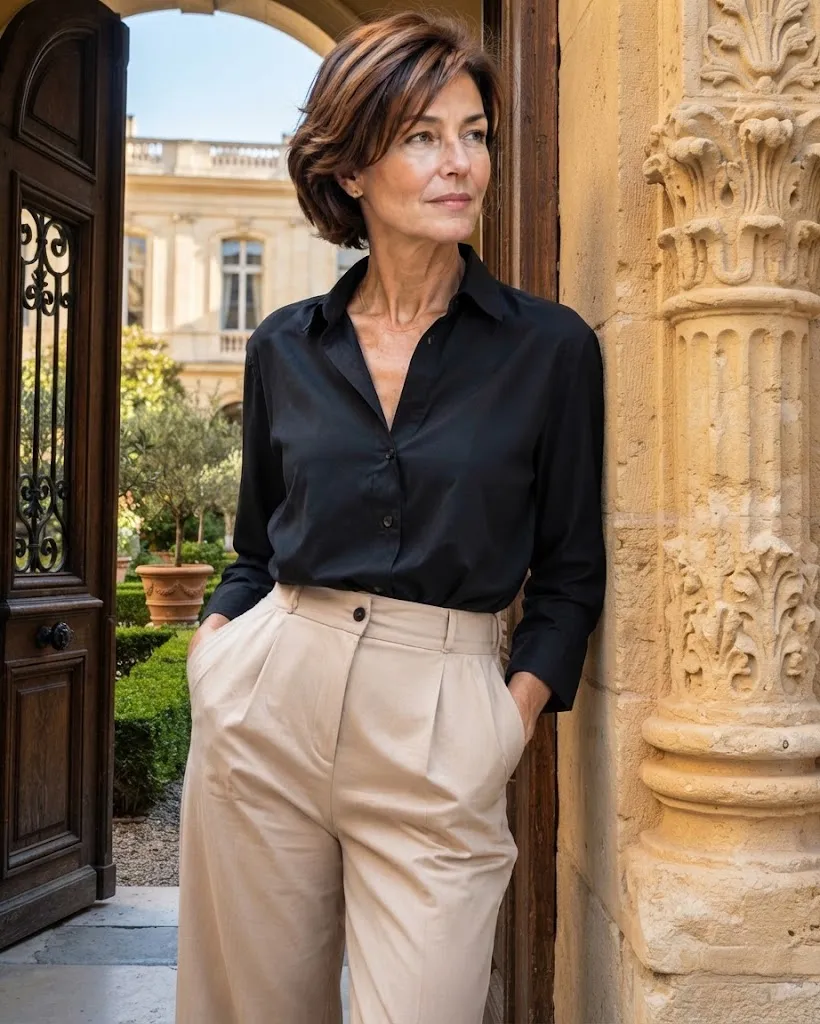
A top French habit: get the shape right before adding extras. When proportions click, you hardly need more.
Match one loose piece with one neater piece. Wide pants pair well with a snug sweater, and an oversized blazer beats layers of baggy clothes over a plain tee.
Hemlines count as well. A jacket hitting the hip gives a different line than one reaching mid-thigh, and a small tuck stops a long shirt from hiding your figure.
You don’t have to show your waist. Just add enough shape so clothes don’t drape like one long sheet.
Quick fit check: before calling a piece unflattering, look at the shoulders, sleeves, hem, and pant length. Small fit flaws often get blamed on the body.
Stand back from a full mirror and view the whole outfit from a distance. See the full shape first, details second.
Good Fabric Makes Plain Clothes Look Smart

French closets love texture because it adds depth to simple clothes. A neat cotton shirt, cozy wool cardigan, linen-blend blazer, or thick jersey top needs less styling than flimsy fabric that wrinkles and clings.
This helps a lot with daily outfits for women over 50. Fabric that holds its form lets you wear less and still look tidy.
Forget fancy brands. Feel the fabric in your hands and see how it sits on you, instead of checking labels or prices.
The best fabric always suits the item and how you live in it.
| Garment or Fabric | What to Look For and Why |
|---|---|
| Cotton shirt | Enough weight to hold the collar without feeling stiff |
| Fine knit | Smooth drape that follows the body without gripping it |
| Trousers | Fabric with some structure so the leg line stays clean |
| Linen blend | Natural texture with less severe creasing than very light linen |
| Jersey top | Medium-weight cloth that does not turn transparent when stretched |
Light, breezy fabrics keep summer outfits cool. In cold months, wool blends, brushed cotton, denim, suede, and soft knits add warmth and texture with no extra pieces.
Style tip: a flat outfit usually needs texture more than another accessory.
Quiet Colors First, One Fun Piece After
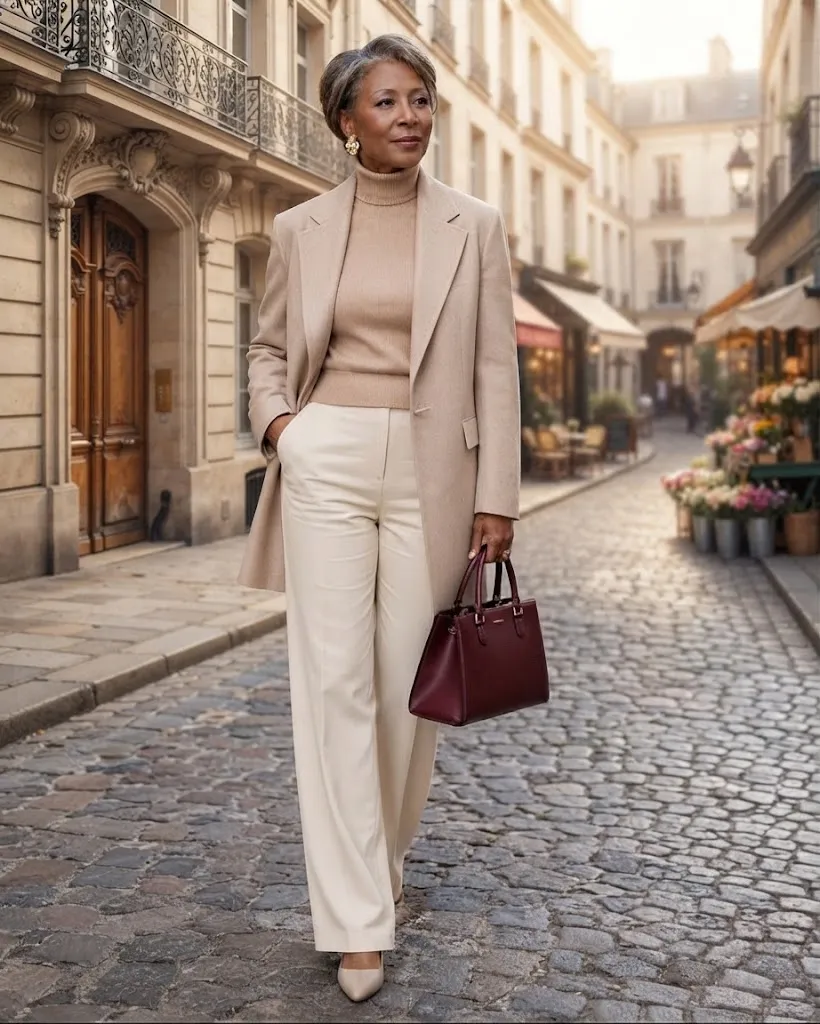
French style loves neutrals for a reason — but that never meant head-to-toe black for everyone.
Fewer colors make mixing easy. Navy, cream, chocolate, camel, gray, olive, soft white, denim, and black form a base that suits all seasons.
Now add one eye-catcher. Burgundy loafers, red lips, a printed scarf, tortoise glasses, a bright blue cardigan, or a fun bag.
Still love bright shades?
Wear them. Just choose where the color goes instead of mixing many loud tones in one outfit.
A green blazer pops over a cream top and dark jeans — the eye knows exactly what to notice.
Repeating a color also helps. One burgundy sweater worn with jeans, gray pants, cream denim, and a navy skirt goes further than four wild tops.
This is why a capsule wardrobe over 50 feels freeing, not boring.
Shoes and Bags Should Finish Your Outfit

French outfits stay in mind because the final touches are subtle but clearly picked with care.
Loafers, flats, trim boots, neat sneakers, low heels, and classy sandals all work — they follow the outfit’s line instead of cutting it.
Comfort comes first, always. Chic means nothing if your feet hurt all day.
Seek soft padding, a stable heel, toe room, and a height that fits your day. You can have all that and still look sharp.
Bags follow the same idea. A neat crossbody, mid-size shoulder bag, soft tote, or clean top-handle lifts even jeans and a sweater.
Try these swaps:
- Flimsy flats?
- Move to loafers with a firmer sole.
- Done with high heels?
- A low block heel or pointed flat does the job.
- Gym sneakers too casual?
- Clean leather sneakers fix that.
- Huge tote too much?
- A smaller shoulder or crossbody bag balances it.
Pricey isn’t the goal. Choose extras that sit well with your clothes.
Keep French Style Real, Not a Costume
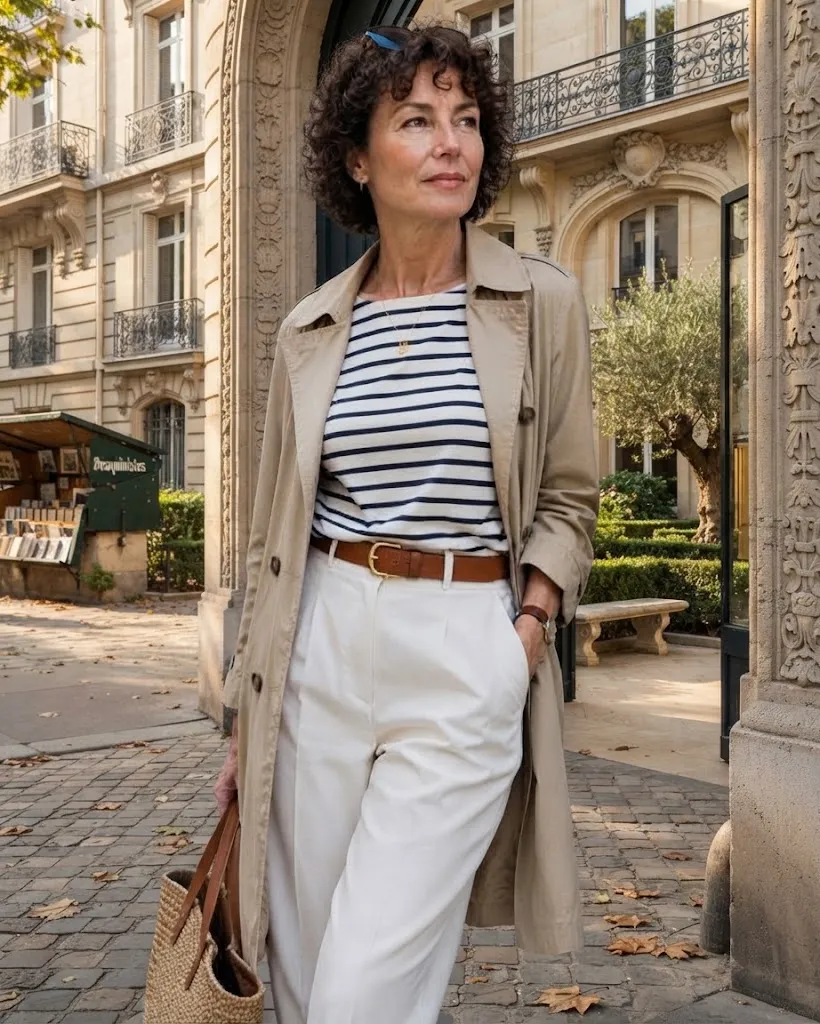
Piling on every French cliché is the fastest way to get it wrong.
A beret, stripes, scarf, flats, red lips, trench, and basket bag each work solo. Together, worn just to look French, they read as dress-up.
Steal the idea, not the uniform.
Like stripes?
Pair them with fresh pants and loafers. Like scarves? Loop one on your bag instead of your neck.
Black gives you power?
Wear it. Cream, olive, navy, chocolate, or rust suits you more? Lean into those.
French dressing over 50 shines when you copy the method, not the magazine photo.
Some classics won’t fit your life, and that’s fine. Hot climate?
Skip the trench. Tired feet?
Skip the flats.
Style works when your closet matches your mornings, not someone else’s photo shoot.
A Simple Outfit Formula to Use Again and Again

Want this to feel easy?
Make a personal uniform that cuts morning decisions in half.
Try this: straight or relaxed pants + plain top + one sharp layer + clean shoes.
The sharp layer can be a blazer, cardigan, short jacket, trench, or light coat. It shapes the outfit while the rest stays simple.
Tweak the same mix for every part of your week.
| Occasion | Pieces | Why It Works |
|---|---|---|
| Errands | Straight jeans + knit tee + cropped jacket + sneakers | Comfortable base with enough structure to look finished |
| Lunch | Trousers + fine knit + blazer + loafers | Clean lines create an elegant casual look |
| Travel | Soft trousers + cotton shirt + cardigan + supportive flats | Layers adjust easily without looking bulky |
| Evening | Dark trousers + silky blouse + short jacket + low heel | Texture adds richness without requiring heavy accessories |
Found one or two mixes you love?
Wear them on repeat, no guilt.
Change the shade, texture, jewelry, or shoes instead of starting over. That’s a uniform that serves you.