How to Dress After Weight Gain Over 50 and Still Feel Like You

How to dress after weight gain over 50 can feel strange at first, because clothes you once loved may not fit the same way now. Your favorite jeans feel tight, a dress pulls at the middle, and your closet starts to feel like it belongs to someone else.
For many women over 50, the size change is not the hardest part. The hardest part is feeling like your own style has gone away with your old fit.
You may start wearing only loose clothes, avoid some outfits, or put off shopping because nothing feels right.
Dress for the Body You Have Today
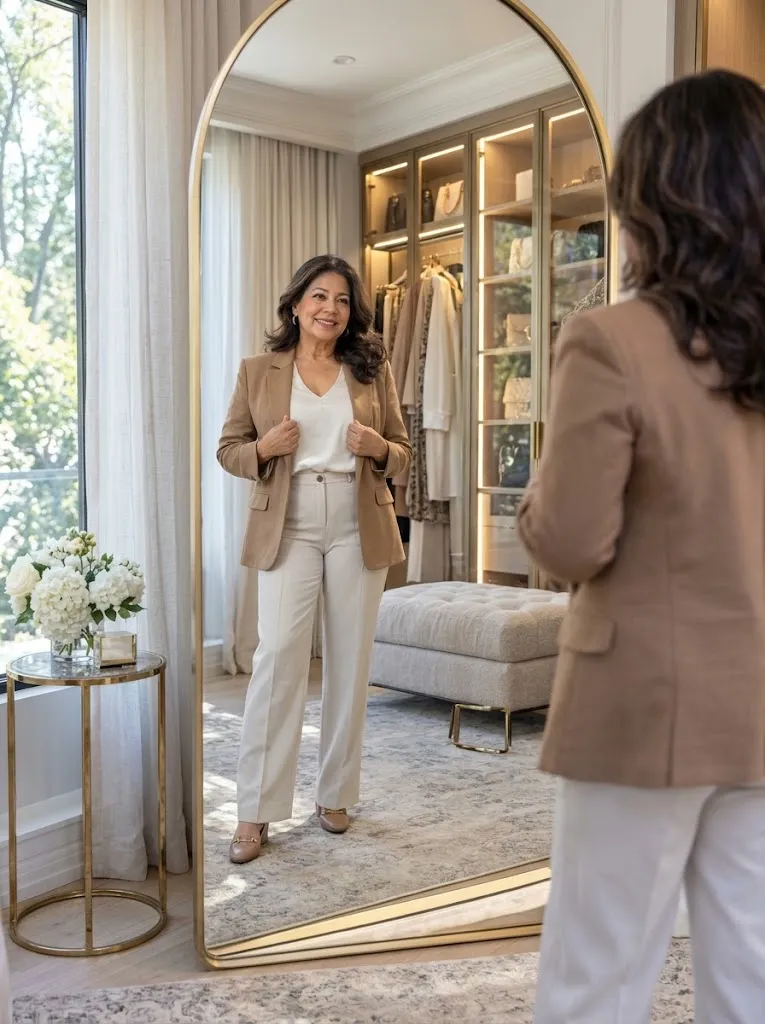
After weight gain, it can be very frustrating to try to make old clothes work when they no longer fit well. You may keep pulling your shirt down, fixing your waistband, or skipping a favorite jacket because it feels tight.
You do not always need a whole new closet. You just need to stop expecting every old piece to fit just like it did before.
Sizes are only labels, and each brand fits a little differently. A bigger size that sits smooth on your shoulders, waist, and hips will often look neater than a smaller size that pulls or bunches up.
Fit Note: When trying on pants, sit down before you decide they fit. A waistband that feels fine when you stand may press into your stomach when you sit.
You can also sort your closet into three groups: clothes that fit well today, pieces that need small fixes, and items you want to store for now.
This helps you see clearly what you can wear. It also makes mornings less stressful, because you no longer have to look through clothes that do not feel good.
Choose Fabrics That Skim Your Shape Without Clinging
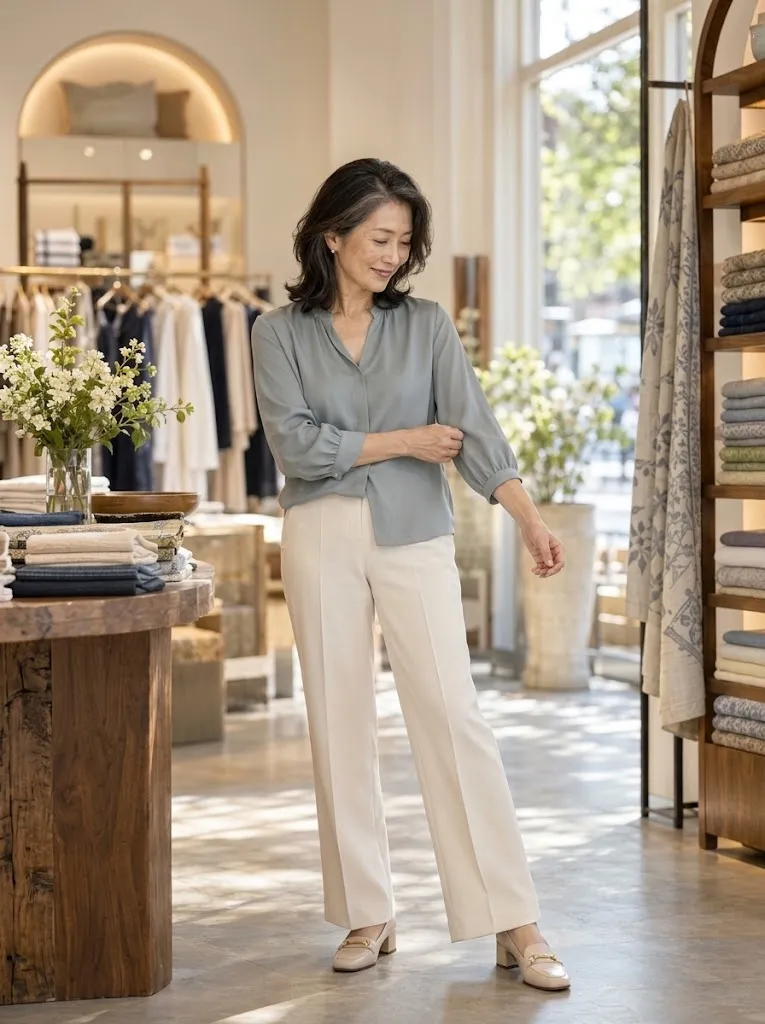
After weight gain, the fabric you pick can matter as much as the size. Some fabrics stick to areas you would rather skim over, while others hang stiff and add bulk where you do not want it.
The best fabrics give you both movement and shape. They let you sit, bend, and walk with ease, while your outfit still looks neat and planned.
Soft woven fabrics, heavy jersey, ponte knit, and stretch denim can be very helpful. They move with your body, so you do not have to pick between comfort and shape.
Here is how common fabrics act when you are changing your closet after weight gain.
| Fabric | What to Look For | Why It Helps |
|---|---|---|
| Ponte knit | Medium weight with gentle stretch | Holds its shape without feeling stiff |
| Stretch denim | Comfortable stretch with good recovery | Allows movement while reducing bagging |
| Viscose or rayon blends | Fluid fabric that falls smoothly | Creates soft movement around the body |
| Cotton poplin | Crisp but not overly rigid | Gives shirts a clean, defined shape |
| Substantial jersey | Soft knit with enough weight | Skims rather than showing every clothing line |
Very thin knits can sometimes show your waistband, underwear lines, or folds in the fabric. If that bothers you, try a slightly heavier fabric instead of just picking a looser size.
A soft, neat shirt over comfortable trousers, for example, can look relaxed and still keep some shape.
Shift Your Proportions Instead of Hiding Your Figure

Weight gain can change how your old outfits sit on you. A blouse may end at an odd spot, your usual trouser rise may feel tight, or a jacket may no longer close with ease.
These changes do not mean you must give up your favorite styles. Often, just changing the length or place of one piece makes the whole outfit feel better.
Notice Where Your Tops End
A top left untucked that ends at the widest part of your hips can make a strong line across your body. If you want a softer look, try tops that end a little above or below that spot.
A relaxed button-down with a curved hem is one good choice. It gives you room in the middle while keeping your outfit neat.
You can also try a small front tuck if the waistband feels comfy enough. This adds a little shape, with no need for a tight or fully tucked-in top.
Give Your Trouser Rise a Fresh Look
High-rise pants are not the best choice for every changing figure. Some women feel better in a mid-rise waistband, most of all when they sit for a long time.
Others like high-rise trousers because they stay in place and make a smooth line under tops.
Try different rises with the same shirt and see how the shape changes. The right waistband should feel safe and firm, with no digging into your stomach.
Let Your Jackets Keep Some Shape
Very loose clothes can look stylish, but a very loose top with an equally loose jacket may hide the shape of your outfit.
A blazer with a clean shoulder line or a soft, neat cardigan can add shape with no tight feeling.
Wear the jacket open if that feels better. The straight lines down the front can make your outfit look longer and more balanced, while the clothes under it still move freely.
Hold On to the Colors, Prints, and Details That Feel Like You
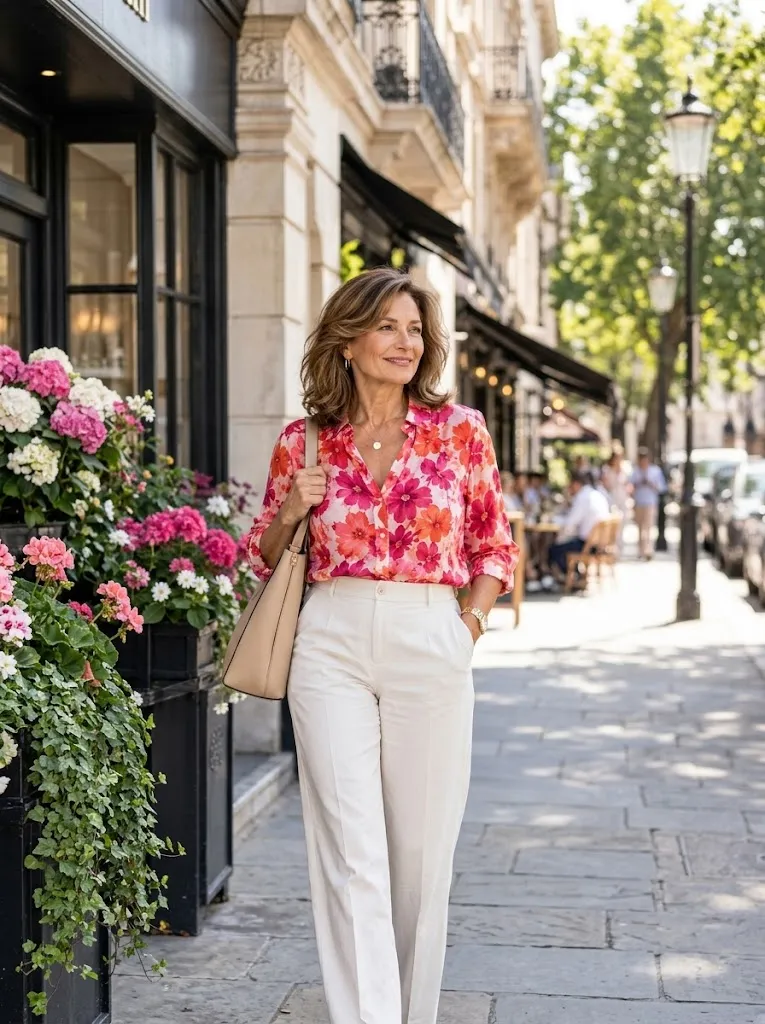
After weight gain, personal style is one thing that often gets lost. Women who once loved color, neat jackets, pretty dresses, or fun accessories sometimes start wearing only plain, oversized basics.
Comfort is important, but it should not take away everything that makes your closet feel like yours.
If you always loved colorful scarves, keep wearing them. If you feel most like yourself in a crisp white shirt, find one with a comfier cut instead of giving up that look.
Small details can help join your current closet with the style you have always loved.
- If you love feminine dressing: Try a softly shaped midi dress, a printed blouse, or a flowing skirt with a defined waistband.
- If you prefer classic clothes: Choose straight-leg trousers, a neat cardigan, a button-down shirt, and simple loafers.
- If your style is relaxed: Wear comfortable jeans, a quality knit top, a casual jacket, and clean sneakers.
- If you enjoy bold outfits: Keep your favorite bright colors, statement earrings, patterned scarves, and interesting shoes.
There is no need to change your personality for a new style just because your clothing size has changed.
Color Note: Wearing a favorite color near your face can make a plain outfit feel more like you. A colorful blouse or scarf is often an easier place to start than rebuilding your whole closet.
Build Easy Outfits That Still Look Put Together
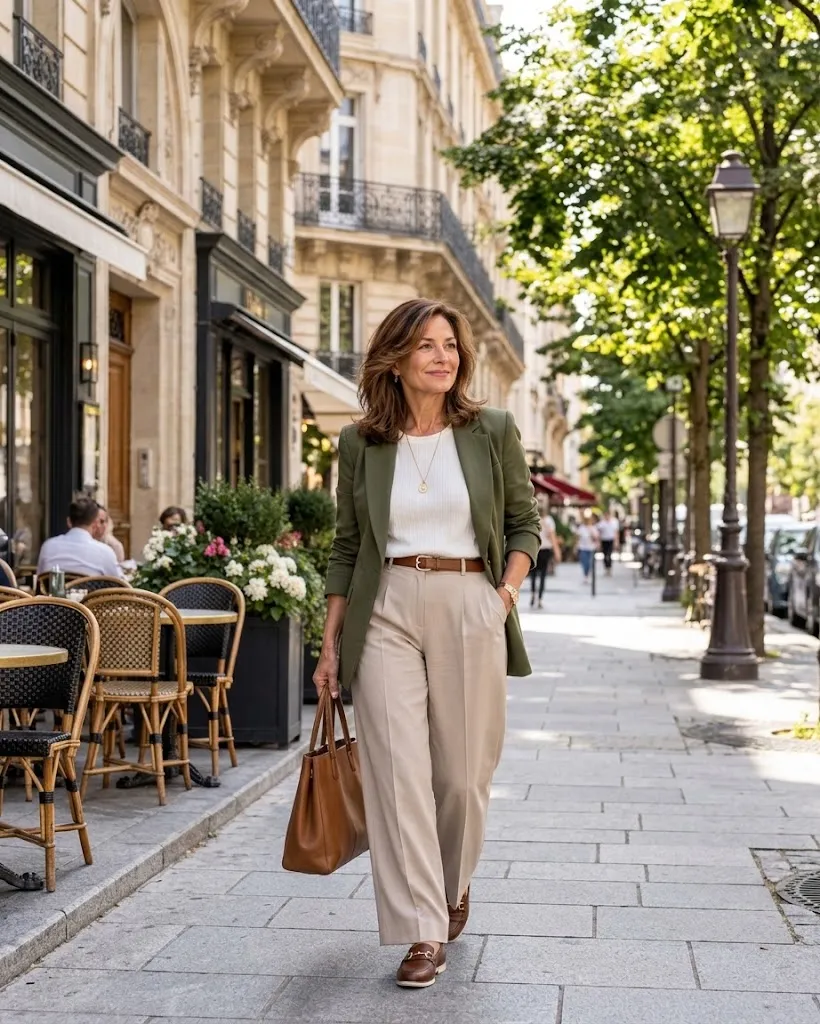
When your body changes, having a few outfits you can trust can make mornings much easier. You do not need lots of new clothes, but you do need pieces that work together with no constant fixing.
One good way is to pair one comfy base piece with a soft, neat layer and one finishing touch.
For example, straight-leg trousers, a relaxed blouse, and an open blazer make a smart casual look that does not need a tight waist.
Here are a few outfit ideas worth trying with clothes you may already own.
| Occasion | Outfit Formula | Why It Works |
|---|---|---|
| Everyday errands | Straight-leg jeansRelaxed knitSneakers | Comfortable movement with a neat shape |
| Lunch with friends | Midi skirtSoft blouseLoafers | Combines gentle movement with definition |
| Casual workday | Ponte trousersButton-downOpen blazer | Adds structure without restrictive layers |
| Weekend outing | Knit midi dressDenim jacketAnkle boots | Balances a soft dress with a shaped jacket |
These ideas are starting points, not rules. The goal is to find two or three outfits you can repeat, with no feeling that you wear the same thing each day.
One very helpful combo is:
Formula: Comfortable straight-leg trousers + softly draped top + open structured jacket.
This combo works because the trousers give a smooth base, the top lets you move with ease, and the jacket adds shape.
Change the jacket color, switch to loafers, or add a printed scarf to make the same base feel new.
For stylish outfits for women over 50, having a trusted combo that fits well often matters more than owning the newest trends.
Stop Dressing Like You Need to Apologize for Weight Gain
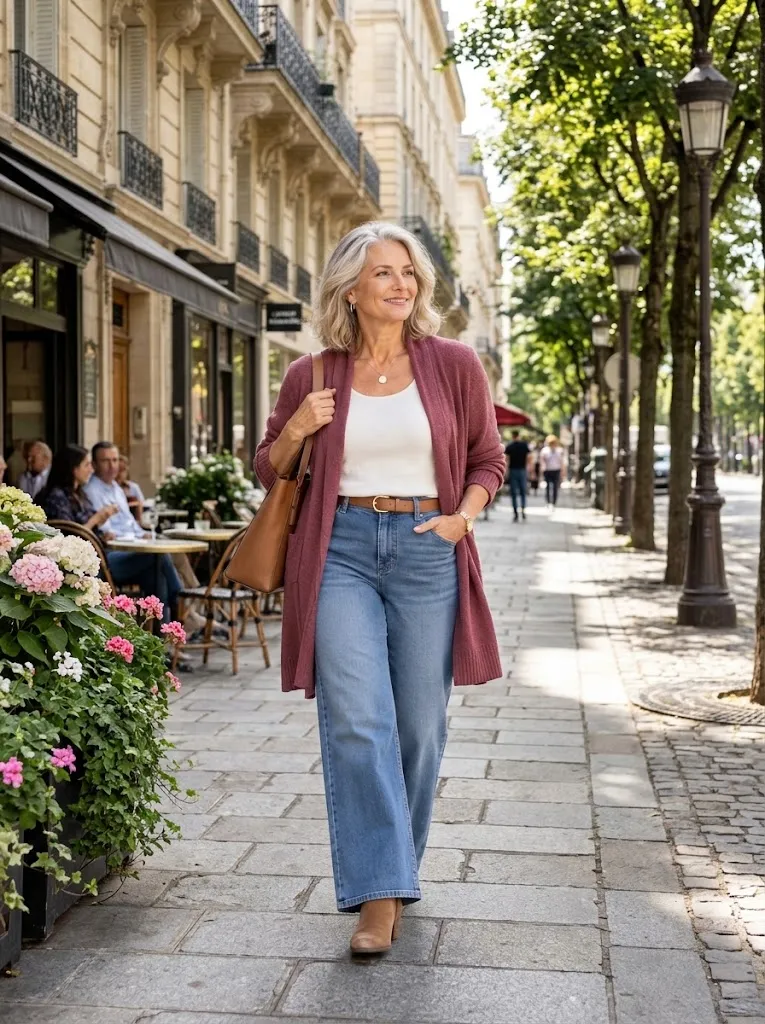
When your body changes, it is easy to pick up new dressing habits. Some seem smart at first, but they can make shopping and daily outfits harder.
One common habit is buying everything oversized because fitted clothes now feel uncomfortable. Another is keeping clothes that do not fit at the front of your closet and hoping they will work again one day.
Neither habit is needed to look good.
The goal is not to hide every change in your figure. It is to wear clothes that fit well and show your taste.
A few small changes in how you shop and dress can make a clear difference.
| Old Dressing Habit | A More Helpful Approach |
|---|---|
| Buying everything two sizes larger | Choose a fit that allows movement without excess fabric |
| Wearing only dark, loose clothing | Keep favorite colors and balance loose pieces with structure |
| Avoiding dresses because the waist feels different | Try shift, wrap-style, or gently shaped dresses |
| Keeping uncomfortable jeans in daily rotation | Find denim with a better rise and comfortable stretch |
| Waiting to buy clothes until your size changes | Build a small wardrobe that fits and serves you now |
You can still wear black, oversized sweaters, or flowing dresses if you truly like them. The big difference is picking them because you like the look, not because you feel you must hide.
Comfort Upgrade: If you keep fixing an outfit, check the fit before blaming the style. Sometimes a longer top, a softer waistband, or a different bra is all you need.
Rebuild Your Closet Without Buying Everything Again
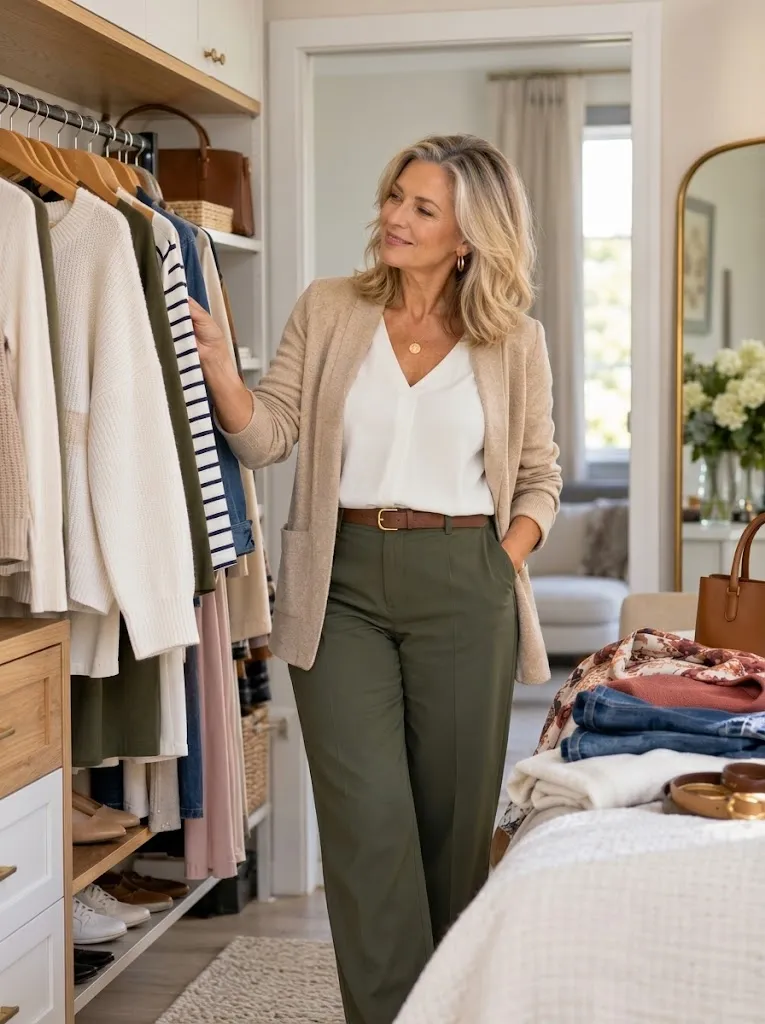
A changing body can make a whole closet feel useless, even when many pieces are still perfectly good. Before you shop, take a little time to find what still fits and what could work with small fixes.
Start with three outfits you would truly wear in a normal week. They might be jeans and a sweater, trousers and a blouse, or a simple dress with a jacket.
Try each outfit on and notice how it feels when you sit, walk, and reach. Notice which pieces stay comfy and which ones need constant fixing.
Then, make a short shopping or fix-it list based on real gaps, not frustration.
For example, if your trousers fit but several tops pull across the bust, you may only need a couple of better-fitting shirts. If your blazers feel tight in the shoulders, that may be the first area to update.
A small capsule wardrobe over 50 can start with pieces you already own. Keeping your most useful colors and shapes makes it easier to add new clothes with no loss of your familiar style.
Do not forget about alterations, either. A tailor may be able to fix hems, let out seams that have room, or improve the fit of a piece that is close to working.
Budget-Friendly Tip: Buy for your current size and daily life. One pair of comfy trousers you wear twice a week is more useful than several cheap pieces that stay in the closet.